The Paul Tenny/Henry Brown House c1895
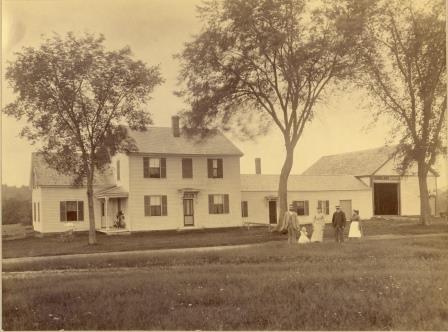
This house was a landmark in Hudson Center for many years; standing at Kimball Hill Road opposite the Hudson Center Common and directly across from the front steps of the Baptist Church. The first occupant was Dr. Paul Tenny who moved to town about 1791 and later settled here. The property was sold to Dr James Emery in 1849. When Dr. Emery retired it was purchased by Henry C. Brown; in 1935 it was purchased by John T. Benson and became part of the Benson’s Wild Animal Farm property. Vera Lovejoy and her family lived here while she was managing the Benson Farm. This c1895 photo shows, left to right, Henry C. Brown; Ina Louise Brown, daughter; Clara Bryant Brown, his wife; and John and Eliza Brown the adoptive parents of Henry. Photo from the Historical Society Collection.
Post Offices at Hudson Center
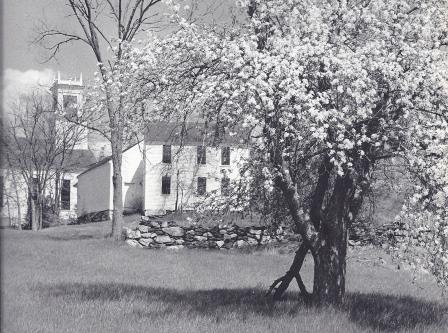
The first established post office in Hudson was at Hudson Center. The Postmaster, Reuben Greeley, used this ell attached to the west side of his house for the Post Office. This 1960 photo shows the back side of the ell from the field located at what is now 230 Central Street; the 7-11 Convenience Store. Reuben served as postmaster from 1818 until 1829 and then again from 1849 until 1853 after which the Hudson Post Office was moved to the bridge area. This ell was a part of the Greeley/Wentworth property when purchased by the Baptist Church in 1962. A few years later the large section was removed for safety reasons and the remainder configured into a garage. This garage has since been removed also. From 1876 until 1910 the Hudson Center Post Office was located in the Railroad Depot. So, for a period of 34 years the town of Hudson had two post offices; one at the bridge ad one at the center. This photograph is used here by permission of Hastings House Publisher the publisher of “The New England Image” by Samuel Chamberlain.
The Parsonage at 234 Central Street c1980

Baptist Church at Hudson Center C1905
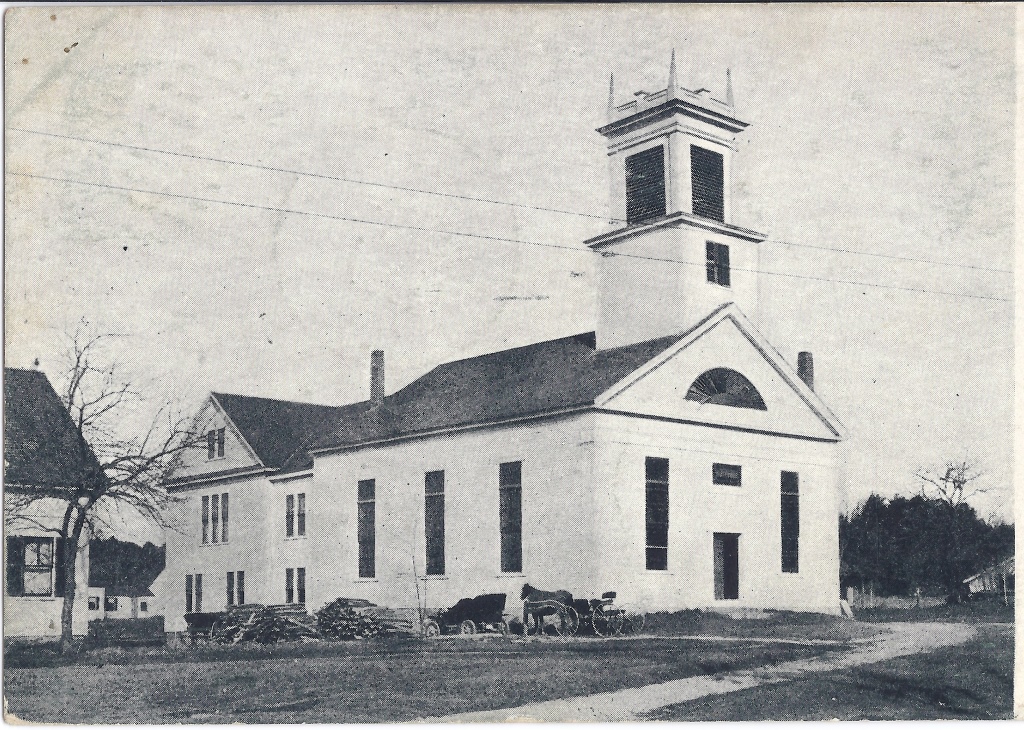
The First Baptist Church of Hudson was organized in 1805 at the home of Thomas Senter on at what is now the Old Derry Road near the Londonderry Line. For the first 37 years services were held in members’ homes or at the North Meeting House located just east of the Town House. The sanctuary of this church at the corner of Central and Greeley Streets was constructed in 1842. In 1888 a short alcove was added to house the new organ; then, in 1897 the large vestry was added. This photo was probably taken at the time of the centennial celebration of the church in 1905. Over these years the exterior of the building has not changed significantly except for replacing the original steeple which was completed in 2007. To the left of the church we see part of the Greeley/Wentworth home, now the church parsonage. The stacks of wood seen here were used to heat the building. The dirt roadway in front of the church is either Central Street or a short cut from Central Street to Greeley Street. Photo from the collection of the Hudson Historical Society.
238 Central Street
Town House Hudson Center
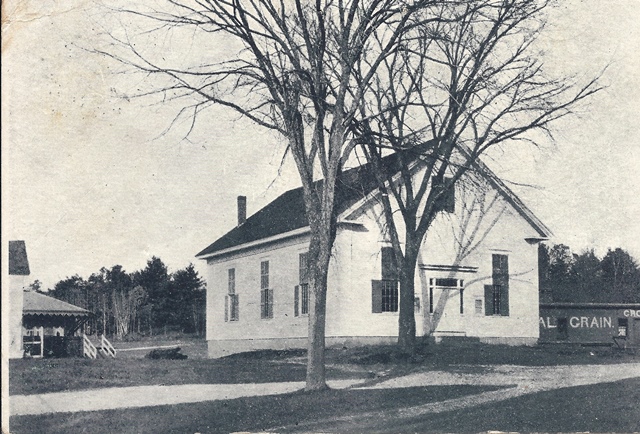
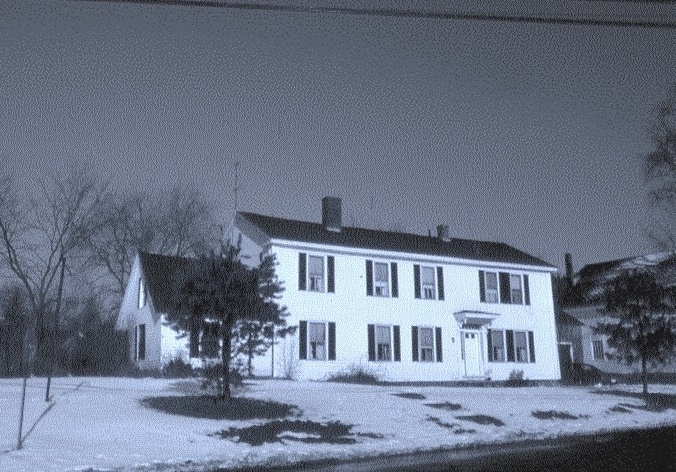
In 1857 Hudson contracted with William Anderson of Windham to erect this Town House on the site of the Old North Meeting House in Hudson Center. The North Meeting House was deeded to the town by the Baptist Society after The Baptist Church was completed in 1841. Town meetings were held here until the mid 1930’s when there was a desire among the town people to hold meetings at the bridge area. Wattannick Grange held their meetings here from its organization. In 1963 the town authorized the sale of the building to Wattannick Grange. To the right of the Town House is Harvey Lewis’ Coal Grain and Grocery; on the left and rear is the B&M Railroad Depot. Today, now that Hudson and Wattannick Granges have merged, this building is known as Wattannick Hall the home of Hudson Grange No 11. Photo from the Historical Society collection.
Benjamin Dean House — A House Twice Moved
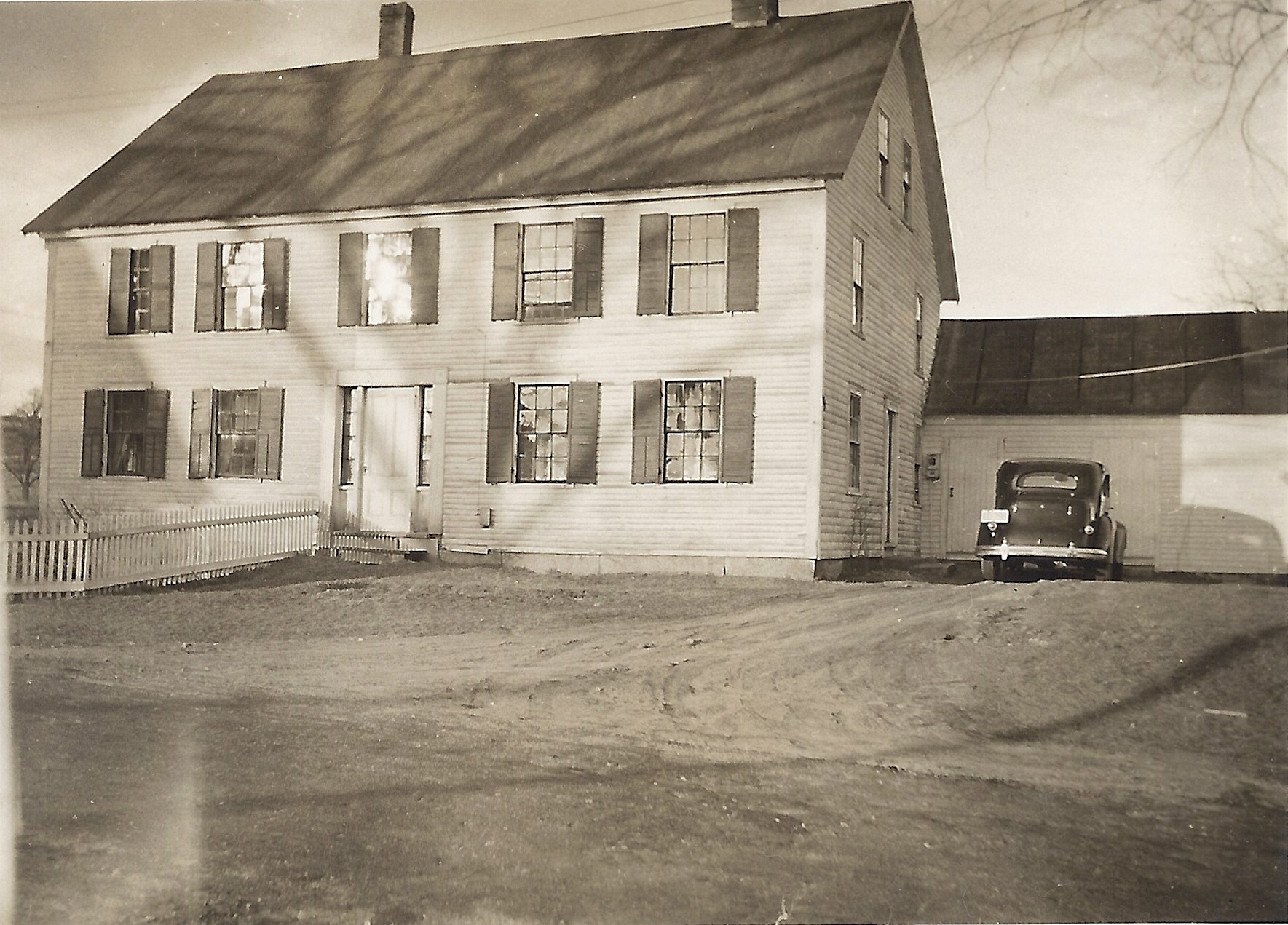
This house was built by Abraham Page about 1747 on Bush Hill Road on part of the old Haselton Farm. Between 1747 and about 1838 this house was likely occupied by Abraham Page, Jr and early members of the Haselton family whom he helped to raise. In 1838 the owner, Rev. Benjamin Dean, moved and remodeled the house to a location on Hamblet Avenue just north of the Eli Hamblet house and facing the east side of the Hudson Center Common. The second floor contained a large room with an arched ceiling, referred to as “Dean’s Hall”. This room was used as a school and a place for public gatherings. Rev. Dean occupied the home until about 1850. The home had various owners until being purchased by the family of Claudia and Richard Boucher. In the early 1960’s when the State of New Hampshire planned out the new route 111 through Hudson Center, this house was simply ‘in the way’. The Boucher family sold the property to the state and later re-purchased the house and had it moved to its present (and third) location on Windham Road. This 1942 photo from the Historical Society Collection shows the house at its second location on Hamblet Avenue.
Post Office Square at Central Street c1900
Go To The Post Office for a Dozen Eggs

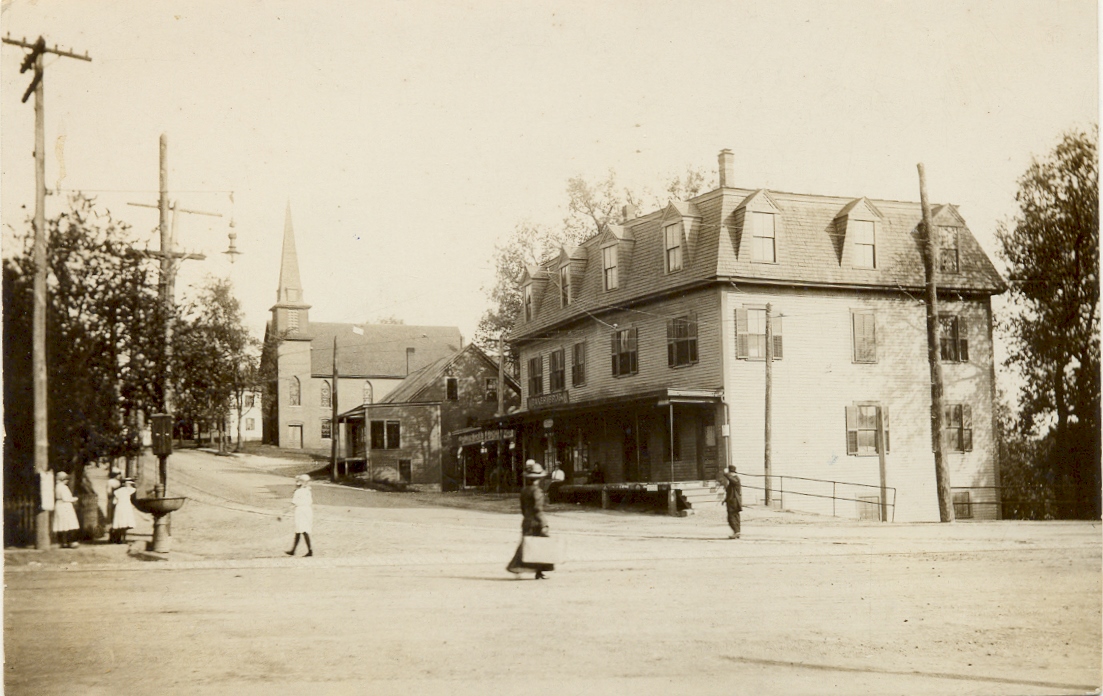
The expression “Go to the post office for a dozen eggs” was a common one during years of our town history when the Post Office was co-located within a grocery business. Charles Daniels took over this business site in 1903 and was appointed Postmaster, a position he held until 1921. Soon after 1903 he was joined in partnership with Charles Gilbert and together they operated a successful grain and grocery business for many years. The post office remained here until 1921 when it was moved into the Morey Building. This location previously known as the Greeley Store Building, was rebuilt by owner Elisha Martin in 1877 following a fire the previous year. This circa 1920 picture is one of a number of post cards of Hudson printed and sold by Daniels and Gilbert. From the Historical Society Collection.
Post Office at Ferry Street 1923

 Remember Hudson NH When...