Three Haselton Sisters

Three Haselton Sisters

In most New England towns many families are interrelated even though they have different last names. Hudson is no exception. This week I introduce you to three sisters who grew up on Bush Hill Road, each of whom married men from Hudson, thus making one extended family out of four.

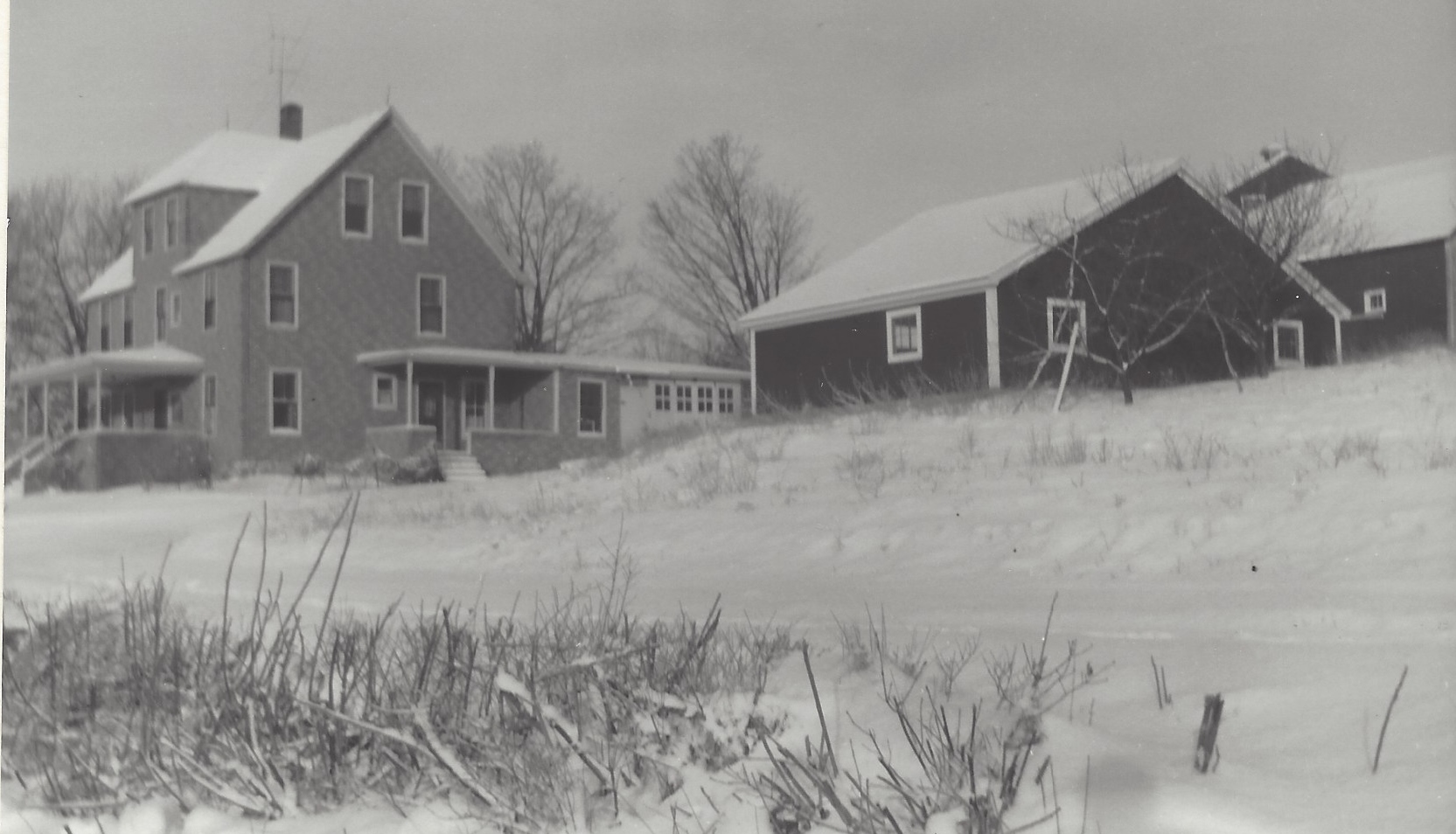
Luther Haselton, age 29, and Polly Ladd Smith, age 28, were married here in Nottingham West in 1826, most likely at the Baptist Church in Hudson Center. At that time the Baptist Church was meeting in the North Meeting House, located about where Wattannick Hall is now located. Luther and Polly lived on the Haselton Farm on Bush Hill, in the house adjacent to the Haselton Barn, long since removed. Their family consisted of 2 sons, David and George Washington; and 3 daughters, Hannah Page, Louisa Ann, and Marietta. Members of the Haselton family were hard working, prosperous, considered honest, and prominent in the community. Today I wish to focus on the three daughters and the men each of them married.

Hannah Page (Haselton) Smith
Hannah Page (Haselton) Smith

Hannah Page (Haselton) Smith

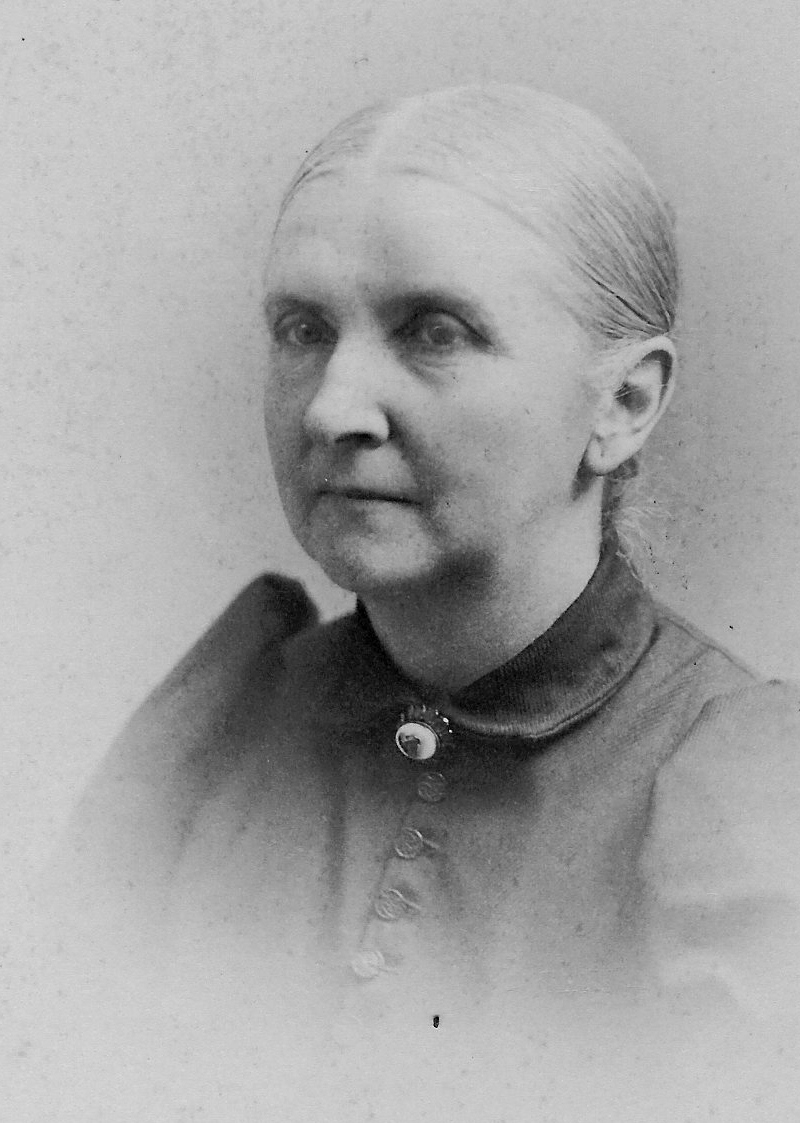
Dr. David Onslow Smith graduated Harvard Medical School in 1850 and established his practice in Hudson with a reputation as a highly skilled physician. He was also an educator and excellent musician; noted for his singing voice, as a conductor of choral groups, composer, and organist. He was also an educator leading a private music schools and serving on the school committee for the Town of Hudson. He married Mary Hannah Greeley in 1855 and they had 5 children: Minnie, Edmond who died young, Martha Robinson, Herbert Lewellen, and Henry Onslow. Mary passed in 1867, leaving Dr. David Smith with a family ranging in ages from 3 to 11. In 1874 Hannah Page Haselton and Dr. David Smith were married. Although they had no children of their own she did enter the existing household and continued with the raising and providing a home for the family. Also, when the time came, Dr Smith and Hannah adopted one of his grandchildren, David Onslow Smith, Jr.

Louisa (Haselton) Robinson
Louisa (Haselton) Robinson

Louisa (Haselton) Robinson

Alphonso Robinson, born 1837, was the 5th generation of the Robinson family to live on and work the farm on Robinson Road. The family homestead at the time was small, likely about four rooms. Alponso lived here with his parents John Anderson and Marinda (Caldwell) Robinson, his grandfather David, and 3 siblings. Louisa Ann Haselton and Alphonso were married in 1862; soon thereafter the small home was enlarged to more than three times the size to allow for multiple generations. Alphonso passed in December 1918, having spent his entire life living on his native homestead. He was a well respected in town and knows for his high ideals.

Marietta (Haselton) Buttrick

Clifton Buttrick was born in Wentworth, NH July 1846 and moved to Hudson about 1850 when his mother, Sally (Cutler) Buttrick married John Bunyan Robinson. Clifton grew up in a Robinson household with two half sisters, both of whom passed young. Clifton and Marietta (Haselton) Buttrick were married before 1869; living on Clifton’s farm located on Windham Road in Hudson Center. They had one son, Ernest Clifton who died young and twin daughters, Clara and Sarah born December 1870. At some point the twins opted to change their names to Belle and Maybel. Marietta passed in July 1873 at the age of 42. By 1874 Clifton married a second time to Charlotte Colburn. I was surprised to learn that when a son was born to Clifton and Charlotte, he was named George Washington Buttrick after Clifton’s first brother-in-law and friend. Clifton was a respected farmer, served as selectman and trustee and long time member of the Baptist Church. He passed in 1935, at which time he held possession of the Boston Post Cane. The twins lived into their mid 80’s. Maybel became Mrs. Jarome Melvin and settled on Barretts Hill Road. Belle remained single and remained on the Buttrick farm. Both were well known in the community.

Here we have four families Smith, Buttrick, Haselton, and Robinson who become one larger family by virtue of the marriages of these three sisters. This shows the importance of following the maternal lines when tracing family history. To use a favorite expression, each of these sisters became the woman behind each of three respected Hudson statesmen.

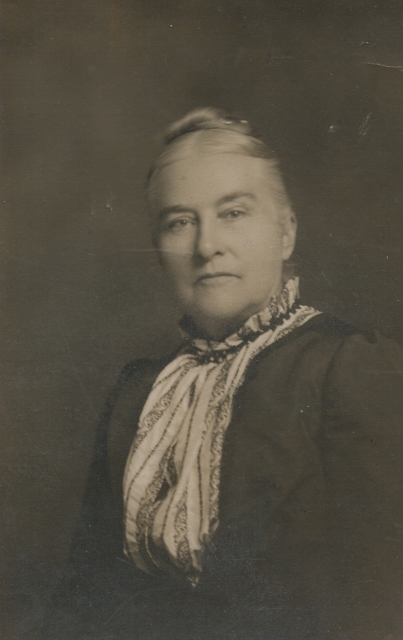
The photos shown here are of Louisa Ann (Haselton) Robinson and Hannah Page (Haselton) Smith. I do not have a photo of Marietta (Haselton) Buttrick. The photo of Louisa Ann, my great grandmother, is from my private collection. The photo of Hannah Page is from the Historical Society collection, complements of the H.O. Smith Family.


Tiny’s Garage Atwood Avenue
Tiny's Garage Atwood Avenue

Tiny’s Garage Atwood Avenue

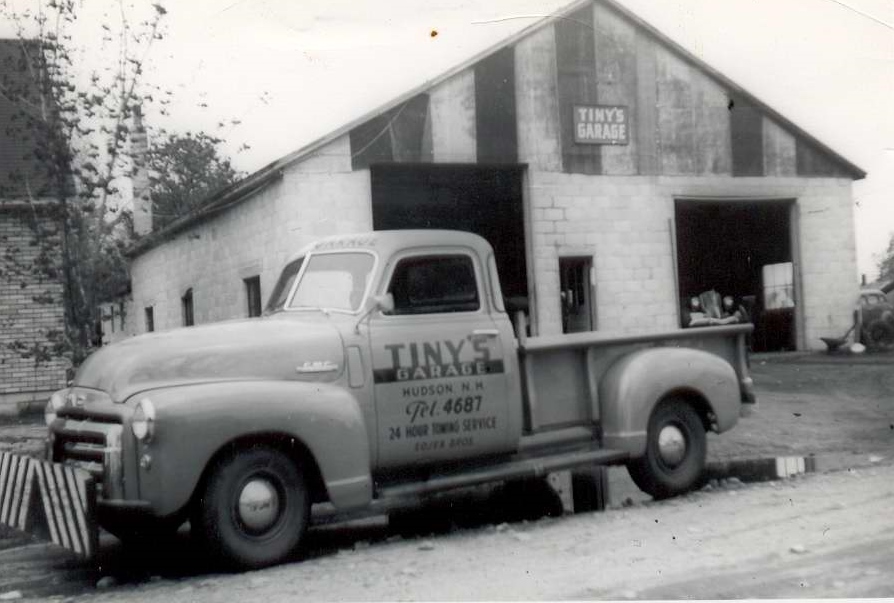
         This week we again travel down Lowell Road with a right turn onto Atwood Avenue and a stop at number 7,  the site of Tiny’s Garage.  We remember the man called ‘Tiny’, his business, and the  family who worked with him.
          Chester ‘Tiny’ Sojka grew up  in Derby, CN and joined the Civilian Conservation Corps as a young man.  After Pearl Harbor he enlisted in the Army and served as a tank mechanic; being stationed in North Africa and Italy.  He met his wife Mary while on leave and they were married in December 1944.  After his discharge in 1945 he started a garage repairing and towing cars.  They settled in Nashua and later moved to Hudson and opened his business here.  Over time the business evolved to include salvaging and selling used car parts, especially those which were hard to find.  His business included the entire cycle:  towing wrecked cars, recycling automotive liquids (gas, oil, antifreeze), breaking down the wrecked vehicle for usable parts, maintaining an inventory of these parts, and selling them to other mechanics and ‘do it yourselfers’ as they repaired vehicles of the same or comparable model.  I’m sure many mechanics or DIYers remember going to or calling ‘Tiny’ to see if he had the needed part in stock.  I myself recall an ad for Tiny’s that said:  Please Drive Safely – We Don’t Need your Business.
        ‘Tiny’ and his brother John were noted for their inventory control prior to the computer age. Much of the inventory was well cataloged in their minds augmented by books that cross referenced replaceable parts.  All customers, professional or not received the same service and same price.  This became a highly competitive business.  A 2-way street with insurance companies was established:  biding for the wreckage in all parts of New England, salvaging usable parts and placing then in stock, then selling to insurance companies or their mechanics to get damaged autos back on the road.
      This was a family business.  He was helped by brother John; his wife Mary acted as the bookkeeper, and son Eric grew up with the business and took over from ‘Tiny’.  He had a passion for miniature Dachshunds. He rode his motorized scooter with pet Dachshund Holly on board  in the early 2000’s.  ‘Tiny’ passed in 2004 at the age of 87 leaving behind memories which defy his nickname.
           Information on Chester ‘Tiny’ Sojka and his business was previously published in The Hudson News November 12, 1969  and in the Nashua Telegraph at the time of his passing in November 2005.  The photo is from the collection of the Hudson Historical Society.

Mellen Farm Barretts Hill Road C 1960

Mellen Farmhouse C 1960

Mellen Farmhouse C 1960

Charlotte and Judah Mellen purchased the Bagley Farm in the spring of 1939.  This farm was located in Hudson Center on the left side of  Barretts Hill Road just a few hundred feet after turning  from Windham Road.  The nine plus room house, barn, out-buildings, and open fields were located  up the hill and overlooking Windham Road.  Our photos of the farm house and grazing herd of dairy cows were taken about 1960.  The Bagley Farm had been in the family since about 1900.
Initially the house had white clapboard siding and a one-pipe hot air heater, most likely powered by wood or coal.  Over time the clapboards were replaced with light green siding and the heater replaced with steam heat powered by oil.  The out-buildings included a small garage and on the hill above the garage a building used at first for the two dapple gray work horses and later to house the John Deere Farm equipment.  There was a large dairy barn for their herd of Holstein and Guernsey cows.  Hay was stored in the lofts.  At one end of the barn was an attached milk room; on the other end two silos.
At first the dapple greys were used for the farm work.  The land could not be worked fast enough with the horses so, when it became possible the John Deere equipment was purchased.  It was a worthwhile investment.  The fields were adequate for cutting and storing hay for the winter, except on a dry summer.  Then hay from Canada was purchased through Mr. Charbonneau who trucked large trailer loads from Canada.  There was not enough cleared acreage to also raise corn for silage.  As a result corn was purchased from a farmer on the Litchfield Road.   Their son Clayton would cut the corn, load it onto two platform trailers, and then haul it over the roads with the John Deere tractor.  The silos were filled each year.
Mellen Farm Pasture C1960

Mellen Farm Pasture C 1960

The main produce was milk from the 30 dairy cows.  The farm also had ever bearing raspberries which Charlotte trucked to Nashua and sold to various markets. The Mellen family farm operated until 1965 when Judah retired.  By December of that year the 155 acres was sold to Edward and  Lois Roy and the Mellen family moved into a house on nearby Frenette Drive in Hudson.
Son Clayton was about 10 years old when his folks purchased the farm.  He helped with the farm work as a teen and  attended Hudson and Nashua Schools.  He later worked for a Milwaukee, Wisconsin company.  He moved to Wisconsin, married, and raised his family there.  He passed in 1997.  There were also two daughters, Ruth and Esther.  They both attended Hudson schools, later married and moved from Hudson.  Ruth and her family lived in Amherst, NH whereas Esther lived in Springfield, VA.  Judah passed in 1988 at the age of 87 while he and his wife were living at Frenette Drive.  In addition to helping Judah with the farm operations, Charlotte taught elementary school in Merrimack for 14 years, retiring in 1978.   She passed in 1999 at the age of 95 while living in Amherst.
You may ask what became of the 155 acres?  By April 1966 plans were before the town Planning Board for Greeley Park Subdivision by RoyCraft Homes, Inc.  After development this subdivision gave rise to Daniel Webster Drive off of Greeley Street.  Later, by 1984 another subdivision plan was submitted; this for Barretts Hill Estates, This development gave rise to Lois Drive, Roy Street, and some of the development near Rangers Drive.
information and photos of The Mellen Farm were written by Charlotte about 1985.  They are a part of the Historical Society collection.

The Captain Joseph Blodgett House C1899
1976007001-2-640x451

Captain Joseph Blodgett House C1899

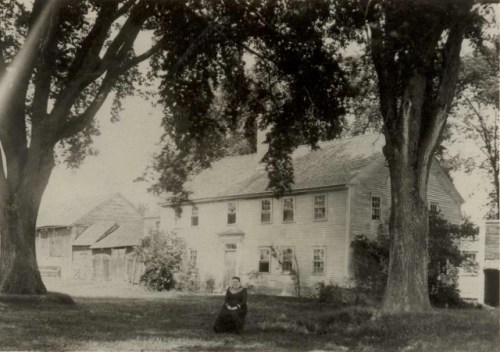
The Captain Joseph Blodgett Homestead was located on Lowell Road across from the intersection with the Pelham Road.  This Joseph Blodgett was born in 1785 and  married Sarah Spalding sometime prior to 1813.  He likely built this house prior to or soon after their marriage.  After raising a family of 2 boys (Spalding Joseph and Austin)  and 2 girls (Sarah Louisa and Martha), Joseph and Sarah continued to live here until they passed; she in 1865, he in 1866.  His military rank of Captain was likely received with the local militia.
Captain Joseph was the 4th generation of Blodgetts from this town to have the name Joseph.  His father Joseph, born 1760, served in the Battle of Bennington in 1777.  Being a lad of 17 he did not receive credit for his service at either the local or national level until 2007, some 229 years later.  His service has since been registered at the national level in 2006 by Ruth (Baldwin) Williams, a descendant of his from Oak Forest, IL, when she applied for membership to the Daughters of The american Revolution (DAR).  You see, young Joseph served with his father and the records credited the father for the service of his son.   His grave site in Blodgett Cemetery received a Revolutionary Soldier marker at a Memorial Day ceremony in 2007.  Mrs. Williams coordinated this event with the Blodgett Cemetery Trustees, The Hudson Historical Society, and the American Legion of Hudson.

Captain Joseph’s grandfather Joseph was born in 1718;  his great grandfather Joseph in 1689 in Chelmsford,MA.  This first Joseph and his wife Dorothy Perham moved to Hudson, then a part of Dunstable, MA, and built a garrision house.  The site of this garrison and the birthplace of their son Joseph (born 1718)  is identified by an historic marker on Hampshire Drive off Lowell Road and a short distance behind Fairview Healthcare.
Back to Captain Blodgett and his wife Sarah.  Of their children, their youngest son, Austin  and their youngest daughter  Martha, are significant to this story.  Martha was born in 1825 and married Royal Burns Buxton of Nashua.  This couple remained in the Nashua/Hudson area and became the ancestral parents  to the Paul and Hazel (Reynolds)  Buxton family.  Austin remained on the homestead as a farmer with his parents.  He married Susan Davis and they raised a family of two sons (Elmer H born 1852 and Austin J born 1861) and a daughter Vinnie (born 1859).  Elmer married Hannah Clyde in 1876.  They lived on Central Street in Hudson until their last few years when they moved the Hunt Community in Nashua,   Elmer was a carpenter, musician, and an outdoors man.
Vinnie and Austin J. remained on the homestead and did not marry.  She passed in 1911 while hospitalized after complications from a fall.  Austin J. passed in 1946 at age 85. Vinnie was a member of the Methodist Episcopal Church (now the Community Church) of Hudson.  She was knows as a kind neighbor and friend to all in trouble.  Austin J. remained on the homestead until the mid 1930’s when he retired and moved to Nashua.
The photo of the Joseph Blodgett home shown here is from the Historical Society Collection.  It was taken by a Mr. Howe of Ashfield, MA in 1899.  The woman in the photo is Vinnie Blodgett, at about 40 years of age. The property remained in the family from Austin to his son Austin J.  The house was torn down about 1934.  The records of the early church of Nottingham, MA as kept by Rev. Nathaniel Merrill were found in this house at about that time.  A handwritten copy has been given to the Hudson Historical Society and the originals placed with the New Hampshire Historical Society.  In 1935, through the efforts of historian Dr. H.O. Smith the vital records were published by the New England Historic and Genealogical Society.  The site of this home is now part of the Fox Hollow Condominium Community.

Garrison Farm at 187 Webster Street

2006070005comp

Garrison Farm at 187 Webster

While researching the initial location of the Hills Garrison Marker for last week’s photo, I was reminded of this aerial photo of The Garrison Farm at 187 Webster Street.  The garrison marker was placed by Kimball Webster  in the open field a short distance east (to the right) and down the farm road between the barns. At that time, in 1902, this farm of about 60 acres was owned by Justin M. Sleeper and  operated by himself and his son-in-law Joseph Howard Legallee.
Earlier and following some medical issues Joseph Howard  Legallee could no longer continue his work as a paper hanger.  It was decided that he and his father-in-law Justin M. Sleeper would go into farming together.  In 1891 Sleeper purchased a farm from John M. Thompson on what is now the Marsh Road.  This farm later became the Marsh Place and the site of the present golf course.  Joseph Howard Legallee, his wife Eva, their 2 year old son Howard Sleeper Legallee  and his father-in-law Justin Sleeper moved  to Hudson.  By 1900 they sold the Marsh Road farm and purchased the Hill(s)  Farm of about 60 acres on Webster Street at the intersection with Derry Lane.  This farm included 20 tillable acres and a house in need of repair.  The farm fields were in the river valley and extended on both sides of Webster Street.  On the west they stretched to the river bank.  On the east was the house, pasture for the family cows, and a year-round brook which provided a gravity fed water source for the family home, the farm, as well as water source to the Ferryall Farm (later the Rowell Farm and now Sparkling River) as well as The Hardy Place at the end of Elm Avenue (now the home of Dr. and Mrs. Brody). The Sleeper/Legallee family remained on and expanded the farm operation for 3 generations until about 1950 when the farm was sold to Colby Brothers.
As a  farm it changed hands one more time about 1959 when it was operated by George Colby, Jr and Taze “Mac” McPherson.  This weeks photo was taken some time after 1959 but before George and “Mac” built the Garrison Farm Stand just south of the farmhouse.  The farm stand became a ready source for locally grown produce.  By the late 1980’s and into 1990 subdivision of the farm occurred.  The west field became a residential development (Scenic Lane and Shoreline Drive) and the east side became both residential and commercial.  Currently a small convenience store and landscaping business has developed from the farm stand.
Prior to the 1900 purchase by Sleeper/Legallee this farm takes its roots back to 1661 as it was the northern most part of the land granted to Joseph Hills by the Province of Mass.  Joseph willed this northern parcel of about 89 acres to his son Samuel.  In turn 3 of Samuel’s’ sons – Nathaniel Henry, and James built a garrison and settled here about 1710.  It remained a Hill(s) farm until 1900.
A number of Hudson locals remember the farm stand under ownership of George and “Mac”.  As owners they continued to truck produce to markets but also marketed their produce locally.  A few residents may even remember the ownership of Howard Legallee, his wife Phoebe, and their daughters Shirley, Beth, and Frances.   It was Howard Legallee who transitioned the farm from a family dairy farm into a productive market garden.  This began as early as 1913 when Howard completed a special course in agriculture at UNH Durham.  He specialized in potatoes and later potatoes and sweet corn.  One year his production reached 4500 bushels of potatoes.  With the addition of irrigation and the proper storage barn he was able to sell potatoes year round.
Legallees Potatoes 1939 Small

Legallees Float 1939 Parade

Foremost in what I have read was their participation in the 1939 Old Home Day parade with a huge potato pulled on a flat bed trailer by Howard on his John Deere tractor.  The family worked together on this float; constructing a potato from canvas, colored brown with eyes, sewn into the shape of  a potato and stuffed with hay. Both photos from the Historical Society Collection.

Hills Garrison Marker

Hills Marker

Hills Garrison Marker

Four garrisons were built within the town of Nottingham, MA as a protection against the Indians at the start of or during the time of Lovewell’s War.  A garrison consisted of a two-story dwelling surrounded by a stockade style fence with one opening.  The second story of the dwelling extended out over the first story so the settlers could look down and fire upon any intruders below.
The earliest and most northerly of these garrisons was settled about 1710 on land then owned by Samuel Hills of Newbury, MA and settled by three of his sons, Nathaniel,  Henry, and James.  Kimball Webster, town historian, determined the location of the Hills garrison and placed a granite boulder to mark the location in 1901.  This marker was originally placed 25 rods east (412 feet)  of the Litchfield Road on a farm then owned by Joseph H. LeGalee.  Often called Garrison Farm, this farm remained in the LeGalee family for three generations and became a large market garden; it was  later operated by Colby Brothers.  The stone marker was easily accessible and visible to those working in the fields.  As progress occurred and the use of the fields changed to industrial there was concern over the safety of the marker and it’s interference with the development of the area.
In 2008 when Hills Garrison School was completed and so named, the marker was removed from the Garrison Farm location. The photo of the Hills Garrison Marker shown here was taken at its present location along the entry road to Hills Garrison School.  There is a mystery about this marker for which I do not have an answer.  Three brothers, Nathaniel, Henry, and James built and settled in the garrison about 1710; however, Kimball Webster when he erected the marker only mentions the older 2 brothers, Nathaniel and Henry.  Why was James omitted?  Could it be because at the time he was just a lad of about 13 years of age?
The Hills Garrison was built upon a 45 acre parcel which Samuel Hills had inherited from his father Joseph in 1688; a part of Joseph’s original 500 acre grant from the province of Massachusetts.  Neither Joseph or Samuel settled on their land. But, the ensuing families of Nathaniel, Henry, and James became the foundation of all the Hills development and family in Hudson and many of the surrounding towns. Photo from the Historical Society collection.

Location of First Meeting House

1977032005

First Meeting House Historic Marker

Continuing with the markers of our historic past, this week we visit the Musquash area and the site of the First Meeting House.  Shown here is the second of two markers placed by the town Bi-Centennial Committee following the  1933 celebration.  It was placed near the No 1 schoolhouse, still standing in 1933, which was also the general location of the first meetinghouse for the town of Nottingham, Mass.  Today the marker faces Musquash Road and is easily visible as you enter the Musquash Conservation Area. When you are in the area and look closely behind the marker you will find remnants of the foundation stones of the No 1 school.  The 1933 committee searched the area for a suitable boulder and located one in an old wall on the north side of the schoolhouse.  The marker on granite boulder with a bronze tablet was placed in June 1934.  The bronze has since been removed by vandals and the inscription placed directly into the granite.
Nottingham, Mass was granted a charter, separating it from Dunstable, in 1733.  The town was required to establish a meetinghouse and establish a minister within 3 years.  Settlements within the town of Nottingham were primarily along the river; but they extended for the full length of the town to Lithcfield on the north and  including much of Tyngsboro at the south.  Imagine the difficulty the early town had in agreeing upon a center of town and location of the meeting house!  Finally, on May 27, 1734 it was voted to build the house on this site and to raise it by June 5! With a schedule like this,  I believe the men folk of the town were working on the side frames of the house before this site was selected.  About 1 year later they voted to add a pulpit and seats the meeting house.  Four different sites were considered before this final selection was made.
Nathaniel Merrill, the first settled minister, was ordained here as a congregational minister in November 1737.  His farm was located on the Back Road (now Musquash) 1/4 mile north of this site.  He remained here until his passing in 1796.  Strictly speaking Rev. Merrill was not settled within 3 years; but, the early residents did not neglect their responsibility.  Money was allocated to hire preachers from time to time for short periods until Rev. Merrill was settled  in 1737.
Once established little appears in the town records about the meeting house until the settling of the province line in May 1741 and the subsequent incorporation of New Hampshire towns; especially Nottingham West.  These boundary changes completely upset any agreements and calculations for a meeting house in the center of town.  The town center had just shifted north to about the location of Blodgett Cemetery. Photo from the Historical Society collection.

Town Office Building C 1965

1965002001

Breaking Ground for Town Office March 1965

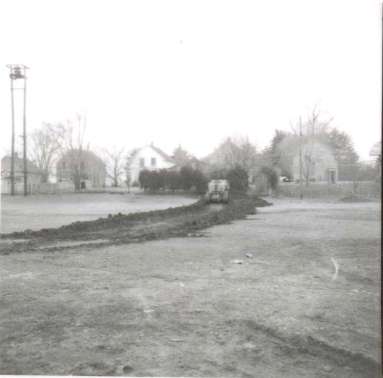
At the Annual Town Meeting in March 1964 we appropriated $50,000 for a Town Office Building.  Soon thereafter Leonard Smith was selected as the designer.  Plans and specifications moved forward and the required public hearing was scheduled for December 8, 1964 at the  H.O. Smith School.   The plans provided about 4,800 square feet of floor space which  would accommodate the Selectmen’s office, Police Department, Town Clerk and Tax collector, Planning Board, Board of Adjustment. the Building Inspector, as well as a meeting hall for officials and civic groups.   The School Street site was selected because the town owned the property and the playground facilities located there could be transferred to the H O Smith playground.   Bids were asked for and all  bids received were above the appropriation.  This resulted in negotiations between the Board of Selectmen and the lowest bidder.   The contract was signed and ground was broken in early spring 1965.  Our first photo shows the first ‘swipe’ of ground taken by the bulldozer to prepare the former playground on School Street for the foundation for this office building. In the background we see the old fire alarm and the rear of the  row houses along Ferry Street.
Adrien Labrie of Nashua was the General Contractor for the project.  This company was also the contractor for the Alvirne High School addition, in process at the same time.    Because of  pressures to have the school addition ready for September, construction of the Office Building received several setbacks. Originally the  schedule hoped for occupancy during summer of 1965; actual occupancy was delayed until late December of that year.At that time the Police Department and town officers mentioned above moved into this new facility.
1977032013

Town Office Building C 1970

In 1974 a 30 x 60 foot addition was made; and in 1985 a second addition was approved by the town.  This latter addition included the addition of a porch-style life and ramps for handicap accessibility.  Photos from Historical Society Collection.

Central Fire Station C 1955

1989002007

Central Fire Station C 1955

The year was 1951 and Hudson’s population was rapidly growing.  The Town’s four-stalled rented fire station on Ferry Street was already overcrowded.  The problem was simple:  how could the town build a larger fire station without raising the already high tax rate?  The Selectmen, the then volunteer fire department, and Frank Nutting had a plan.  They would borrow $40,000.  The  yearly cost to repay  this loan would be about the same as what the town was already paying for the rented station.  This money would be used for materials; the labor to build the station would come from volunteers.  At the town meeting in March 1952, the town voted to build a firehouse at a cost not exceeding $40,000.
The planning and architectural work was done by Leonard Smith, a local builder and member of the volunteer fire department.  Ground was broken May 1, 1952 on town owned land at the corner of Library and School Streets, opposite Webster School;  utilizing about one-half of the approximately 1.3 acres of the old ball field. Community spirit was high; volunteers came from within the department, the town, town organizations, and even from surrounding towns.  Engineers, builders, merchants, and laborers came forward to help.  The result was this fire station of typical New England architecture with housing for nine trucks, offices, rest rooms, kitchen, future sleeping area, and an assembly hall.  There was also room for expansion.  By fall of 1952 the building was enclosed for winter work and by summer of 1953 the new station was put into service.  One work session occurred on April 3, 1953 with 24 men and 16 members of the fire department.  Following work they were rewarded by a ham and bean supper prepared by Leon Hammond, Norman Crosby, and Lewis Reynolds.
This facility housed the fire and police departments.  Later the upstairs was used for temporary classrooms, then for meetings and classes for both departments with space for supplies.  The Board of Selectmen moved their office from the basement of the Hills Library into the fire station, remaining here until the town office building was built next door  on the corner of School and what is now Chase Street.  At that time Chase Street ended at School Street and did not extend to Ferry Street.
As town growth  and needs of the fire department continued an addition to this station has occurred as well as the addition of satellite stations on Burns Hill and Robinson Roads.  Shortly after the passing of Leonard Smith in  2002, the Central Fire station was renamed The Leonard  E. Smith Fire Station” in his memory.  Photo from the Historical Society collection.

Bank of NH C1976

1977004019

Bank of New Hampshire Derry Road C 1976

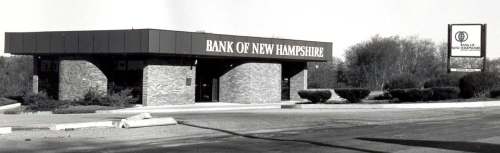
In August 1970 the Bank of New Hampshire president, Davis P. Thurber, announced the purchase of land at the northern part of the 20th Century Shopping Center on the Derry Road and their plans to build a branch office as a free-standing unit.  This bank celebrated its opening in January 1971 under the management of Edward Kerouac.  The Hudson Board of Selectmen; Frank Nutting, Stanley Alukonis, and James Hetzer; Chamber of Commerce President, Don MacIntyre; and officials of the Bank were present at the ribbon cutting ceremony.  The bank offered longer hours, more services, and drive-up banking.  The Bank of New Hampshire was the former Second National Bank of Nashua.

In  2005, by vote of the shareholders, the bank became a division of the Toronto-Dominion Bank.Still doing business at the Derry Street location the name is now TD Bank.  Photo from the Historical Society collection.

Catagories