Ferry Street May 30, 1949
Memorial Day May 30, 1949 Ferry Street

Memorial Day 1949
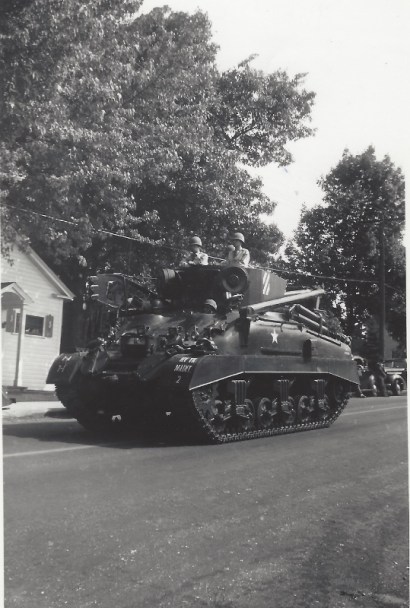
Sherman Tank on Ferry Street
Mary ‘Mamie’ and Herbert Shephard
Methodist-Episcopal Church

Methodist Episcopal Church C 1912
If you identified this week’s photo as an early picture of the Hudson Community Church, you are partially correct! This photo was taken circa 1910 and at that time this building was the Second Meeting House of the First Methodist Society of Hudson. It was built and dedicated in 1880. So, where was the First Methodist Meeting House and what happened to it?
The Methodist Episcopal Society in Hudson was organized in 1840. For about 10 years prior to that date a number of townspeople were embracing the religious opinions of the Methodists. Many were attending services in Nashua as there was no settled minister in this part of town; and from time to time a Methodist preacher would lecture in Hudson. The interest grew and in 1839 the Rev. Jared Perkins, the Methodist minister from Nashua came to Hudson and lectured in the No 4 schoolhouse, near Blodgett Cemetery. The interest was such that in 1840, at the Annual Methodist Conference, the Rev. Abraham Folsom was placed in charge. He was a man of energy and zeal and he quickly organized a church which would endure and continue for many years to come. Through his efforts $1,250 was raised or pledged for building a house of worship.
First Methodist Meeting House
On August 1, 1840 it was voted to build a meeting house on land donated by Abiather Winn. This plain, modest building 40 x 50 feet was dedicated December 2 of that year. Between Webster’s History and the 1858 map of Hudson; I place this First Methodist Meeting House to have been on the south side of Central Street near the intersection with Melandy Road. This meeting house had 44 pews which were sold at auction; the sale of which raised enough money to pay for the building. The $1,250 raised earlier was returned to the donors. A few years later a small parsonage was built near the south-west corner of the church a cost of $400. This location was inconvenient for the parsonage so a new parsonage lot was secured on the north side of Central Street, east of and adjacent to the Congregational Meeting House which had been build in 1842. Sometime close to 1848 the parsonage building was moved onto that lot and remodeled to include an ell and a small stable. So, the parsonage and church building were near each other on opposite sides of Central Street near Melandy Road.
In 1874 along came the Nashua and Rochester Railroad with the tracks running along Central Street separating the Methodist meeting House from the parsonage even more. This was not just inconvenient, it was dangerous. The church decided move the church to the north side of the highway near the parsonage and on the same lot. At that time the church building was enlarged and rededicated in January 1878.
Disaster struck in August of 1879, a little over 18 months after rededication. On Sunday, August 3, immediately after service a fire broke out in the stable.Both the church and the parsonage were reduced to ashes. If not for the efforts of the Nashua Fire Department, and local townspeople, a number of homes and possibly the Congregational church would have been lost. The buildings were insured for $1,500; less than 1/2 of their real value. This was a severe and nearly fatal blow to the devoted church and society.
Services were temporarily held in a small hall near the bridge owned by James Carnes. Discussions resulted regarding a satisfactory and suitable location for a new house of worship. There was much difference of opinion. Some wanted to rebuild in the same location; others wanted a location nearer the bridge. By this time a number of church members were living on the east side of Nashua. When put to a vote the location of the present brick church, now Hudson Community Church, was chosen. Plans were made and by December 7, 1880 The Second meeting House of the Methodist Episcopal Church was dedicated. It was a 40 x 70 ft building of wood and brick, two stories with a tower spire on the north-east corner.
The parsonage building, also destroyed in the 1879 fire, was not replaced at this time. The church provided whatever housing they could for their pastor. By 1888 a parsonage lot was secured by the church on Baker Street; by the fall of 1894 a parsonage was built. The church contracted with Isaac Newton Smith of Hudson Center as the builder. Cost: less that $2,500.
This church and the women’s organization were was very active in the Hudson Bridge community. During World War I the pastor, Rev. Roy Honneywell took a leave of absence from this church to serve as a chaplain in the US. Army. During the 18 months of his absence The Methodists and The congregationalists united for services in the Methodist Church. As time went on, there was more and more union between the two Protestant churches at the Bridge. As we have learned, the Congregation and the Methodist churches merged in 1930 to form the Hudson Community Church.
The photo of the Methodist Episcopal Church shown here is the one used by Kimball Webster in his History of Hudson. It is from the collection of the Historical Society.
Congregational Church at 76 Central Street

Congregational Church Prior to 1909
Early Church Prior To 1842
Church at 76 Central Street
By 1842, under the Pastorate of Rev Willard Holbrook, the church building as shown in our first photo, was built at what is now 76 Central Street. Periods of growth and periods of inactivity continued until 1876 when the church became active with a spirit of growth and union.
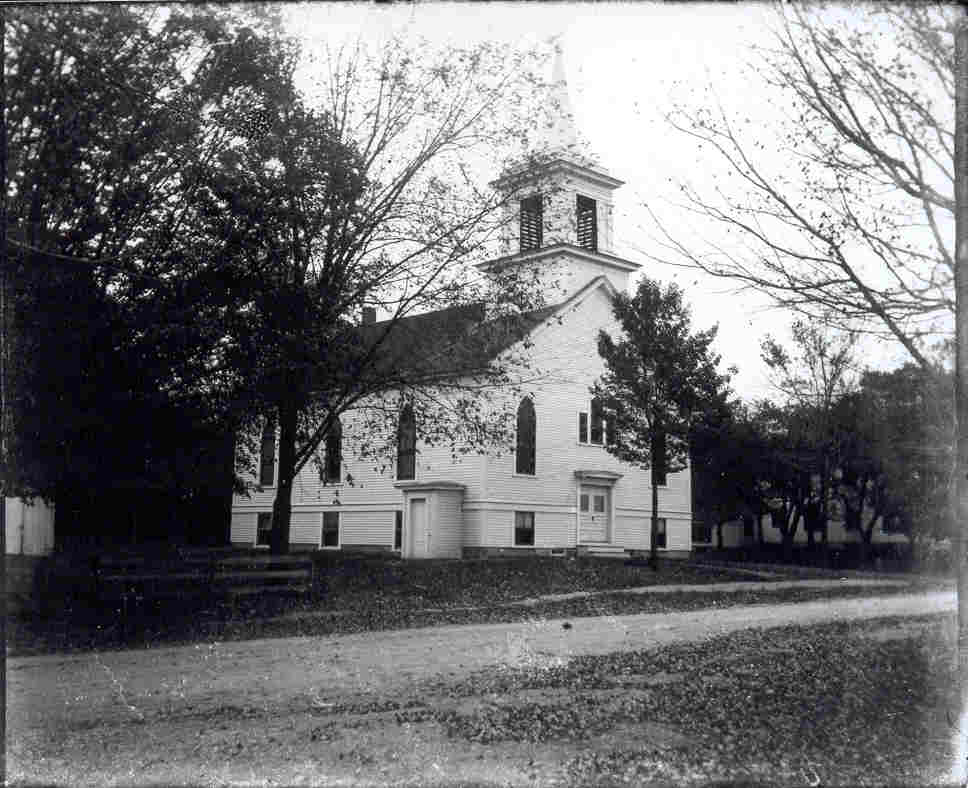
Congregational Church C 1925
Hudson Grange and Andre’s Restaurant C1975

Hudson Grange and Andre’s Restaurant C 1975
Today we have many favorite places in town to enjoy breakfast or lunch: Cookies, Donna’s Place, North Side Grill, and Suzies to name a few. In the 1970’s one such favorite was Andre’s Restaurant located in the Hudson Grange Building at 76 Central Street, and shown in this photo.
Hudson Grange #11 was organized in December 1873 in the Number 6 Schoolhouse on Derry Road with Kimball Webster as the first Master. The grange, a ritualistic family fraternity originally based on rural and farm life, was one of the leading social organizations in town during the 1920’s. Meetings were quite late, beginning ‘after chores’ to permit farmers to attend to the evening milking and feeding before coming out for a meeting. A typical evening would include a crisply run business meeting, recognition of guests, a program, discussions for the good of the order and/or town, and a lunch. A program might be educational, some relevant agricultural topic, local events and/or politics, or entertaining. Often featuring local musical and/or literary talent.
Hudson Grange rented the Odd Fellows Hall (now the American Legion) for it’s meetings from 1903 to 1920. This arrangement proved satisfactory until the winter of 1920 when differences of opinion resulted between the tenants and landlord; as a result the grange looked into a change in meeting location. A large number of members were from the Hudson Center area and advocated using the Town Hall (now Wattannick Hall) in Hudson Center. The body agreed and meetings were moved to Hudson Center; an increase in membership mostly from the center area resulted almost immediately.
For the next 18 months meetings were held in the Town Hall with mixed success; depending upon your proximity to the meeting place. Members from The Bridge area did not want to travel to Hudson Center for meetings and visa versa. Meanwhile representatives from the grange were working to settle differences with the proprietors of the Odd Fellows Hall. Again the matter again came to a vote; and the body voted to return to the bridge area for their meetings.
At about the same time many members from the Center area requested withdrawal cards. This group soon obtained their own charter and Wattannick Grange #327 was organized. A smaller Hudson Grange returned to The Bridge and the Odd Fellows Building until 1935 when the building shown in this weeks photo, the former Hudson Congregational Church Building, became available due to a merger between the Congregational and the Methodist Congregations. Hudson Grange purchased the building from the newly formed Hudson Community Church. Soon after purchase the steeple was removed, the carpet was removed, and the grange held meetings and danced in what had been a church sanctuary.
In 1963 the grange entered into a lease agreement with Andrew Kinsville to establish a restaurant and a catering center; the grange retained ownership and use of the hall as a meeting place. This arrangement continued and Andre’s Restaurant and Antoinnes Catering grew in popularity with many service organizations holding their regular meetings here. Then, in the early morning hours of May 9, 1977 the building known as Hudson Grange (formerly the ‘White Church’ was destroyed by fire. A small group of young intruders were held responsible for the fire as an act to cover up a robbery. At the time of the fire the premises were used for regular meetings by Hudson Rotary, Hudson Lions, chamber of Commerce, Kiwanis Club, and United Commercial Travel. Each of these organizations quickly had to make arrangements to meet elsewhere.
Hudson Grange also made arrangements to meet elsewhere in town and the building was never replaced. By the mid 1980’s the property was sold. A private residence is now located at 76 Central Street. A few years ago in 2001 members of Hudson Grange and Wattannick Grange merged back into the charter of Hudson Grange. Meetings are now held in Wattannick Hall in Hudson Center.
99 Dracut Road

99 Dracut Road C2004
Oginskis/Karos Homestead
Our Remember Hudson… travels this week take us to the south end of Hudson and 99 Dracut Road; for many years home to the Oginskis/Karos Family. The family of Joseph and Barbara (Martin) Oginskis purchased a farm of 57 acres plus house and barn from John Balandis on Old Lowell Road (now Dracut Road) in 1927. Their daughter Vera was about 22 years of age at the time. By 1940, Barbara was widowed; Vera was employed as a mill operator in Nashua. John Karos was residing at the farm and working as a farmhand. Four years later, in 1944, Vera and John were married.
This farmhouse at 99 Dracut Road remained home to Vera and John as well as to Barbara, Vera’s mom, who passed in December 1950. John worked as a machinist in Nashua, his last employment was with Sanders Associates. John passed in August 1966. Vera passed in 2004 at the age of 98. She lived all of her remaining live, except last few months, in this house; having been a Hudson resident for 75 years. I did not know Vera; but in talking with folks who did know her, she was a generous and respected neighbor. One neighbor remembers Vera’s kindness as she passed this home on her way to to catch the school bus a mile from her own home. Another person remembers Vera’s artistic talents and was able to save one of Vera’s paintings before the house was demolished. That painting is now at the Historical Society.
Hudson Meadows
By 2004 all but 14 plus acres including dwelling and barns had been subdivided and sold. As part of her estate the remaining acres were sold to a developer and Hudson Meadows Condominium Association was soon established.
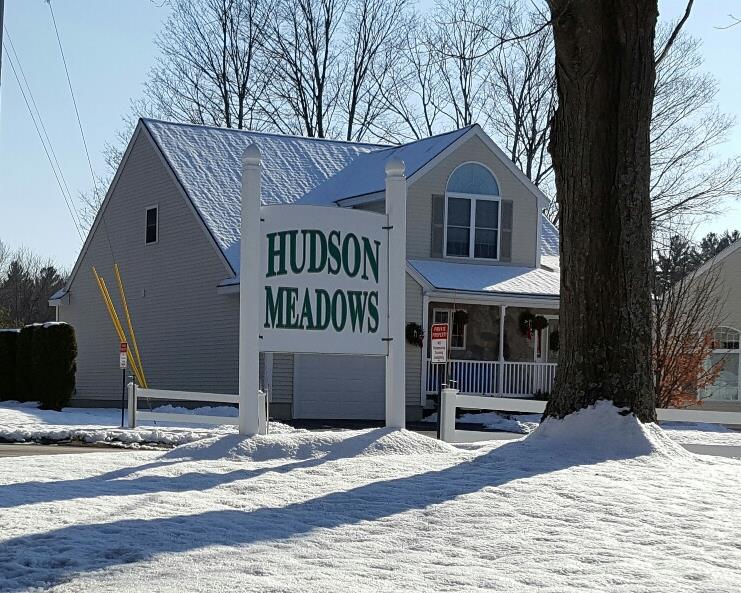
99 Dracut Road 2016
In the 13 years prior to 1927 this 57 acre farm with buildings had changed hands about 5 times. Going back to the early 1800’s this farm was purchased in 1824 by a Paul Hardy from Pelham, NH and it remained in the Hardy family until about 1913 when it was sold by his daughter Susan (Hardy) Cutter. From the age and style of the farmhouse I estimate it was built about 1850 by the Hardy Family.
The photo of the Karos Farmhouse is in the collection at the Historical Society compliments of Hudson Meadows Association. The photo of Hudson Meadows was taken just this week.
Three Haselton Sisters
Three Haselton Sisters
In most New England towns many families are interrelated even though they have different last names. Hudson is no exception. This week I introduce you to three sisters who grew up on Bush Hill Road, each of whom married men from Hudson, thus making one extended family out of four.
Luther Haselton, age 29, and Polly Ladd Smith, age 28, were married here in Nottingham West in 1826, most likely at the Baptist Church in Hudson Center. At that time the Baptist Church was meeting in the North Meeting House, located about where Wattannick Hall is now located. Luther and Polly lived on the Haselton Farm on Bush Hill, in the house adjacent to the Haselton Barn, long since removed. Their family consisted of 2 sons, David and George Washington; and 3 daughters, Hannah Page, Louisa Ann, and Marietta. Members of the Haselton family were hard working, prosperous, considered honest, and prominent in the community. Today I wish to focus on the three daughters and the men each of them married.
Hannah Page (Haselton) Smith
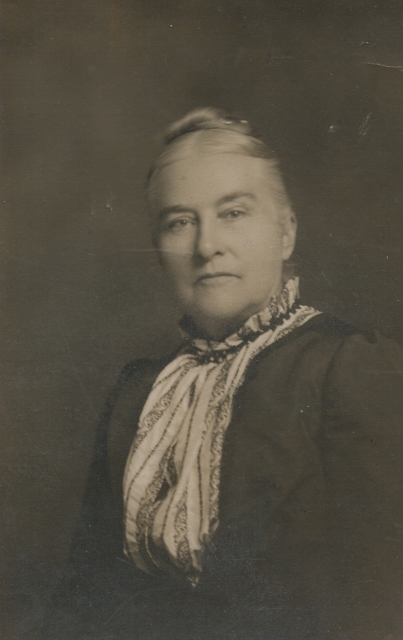
Hannah Page (Haselton) Smith
Dr. David Onslow Smith graduated Harvard Medical School in 1850 and established his practice in Hudson with a reputation as a highly skilled physician. He was also an educator and excellent musician; noted for his singing voice, as a conductor of choral groups, composer, and organist. He was also an educator leading a private music schools and serving on the school committee for the Town of Hudson. He married Mary Hannah Greeley in 1855 and they had 5 children: Minnie, Edmond who died young, Martha Robinson, Herbert Lewellen, and Henry Onslow. Mary passed in 1867, leaving Dr. David Smith with a family ranging in ages from 3 to 11. In 1874 Hannah Page Haselton and Dr. David Smith were married. Although they had no children of their own she did enter the existing household and continued with the raising and providing a home for the family. Also, when the time came, Dr Smith and Hannah adopted one of his grandchildren, David Onslow Smith, Jr.
Louisa (Haselton) Robinson
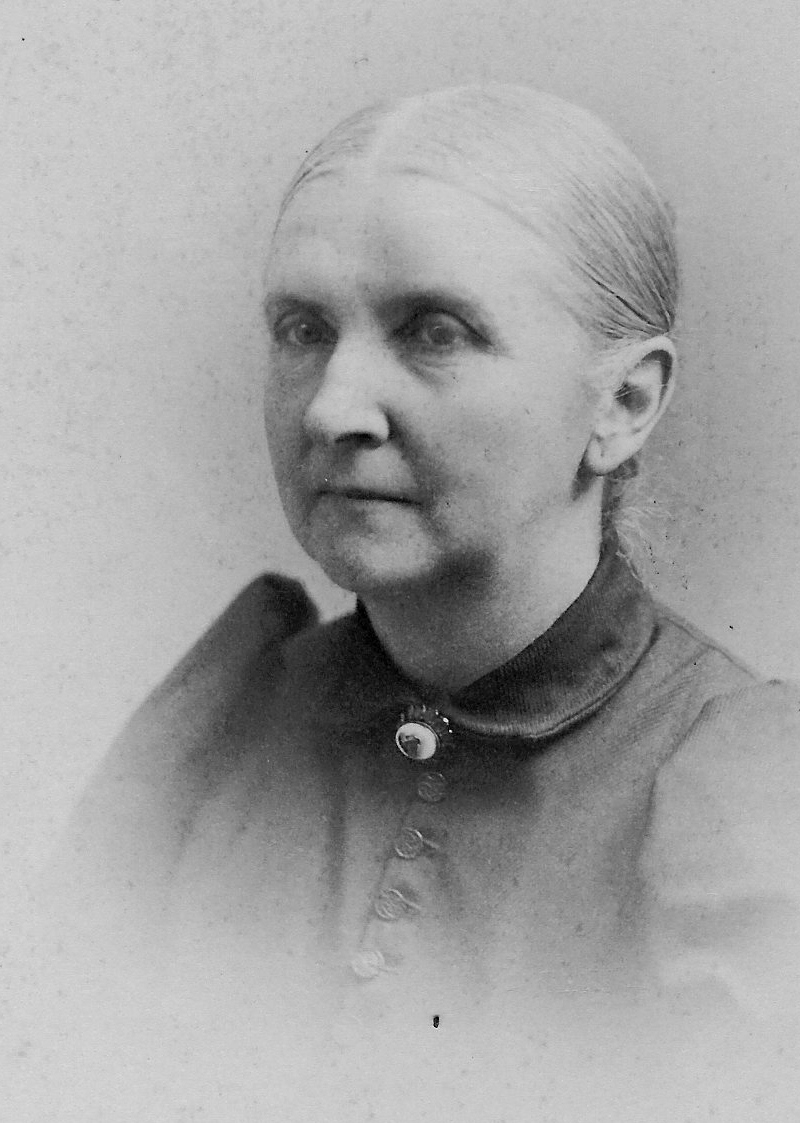
Louisa (Haselton) Robinson
Alphonso Robinson, born 1837, was the 5th generation of the Robinson family to live on and work the farm on Robinson Road. The family homestead at the time was small, likely about four rooms. Alponso lived here with his parents John Anderson and Marinda (Caldwell) Robinson, his grandfather David, and 3 siblings. Louisa Ann Haselton and Alphonso were married in 1862; soon thereafter the small home was enlarged to more than three times the size to allow for multiple generations. Alphonso passed in December 1918, having spent his entire life living on his native homestead. He was a well respected in town and knows for his high ideals.
Marietta (Haselton) Buttrick
Clifton Buttrick was born in Wentworth, NH July 1846 and moved to Hudson about 1850 when his mother, Sally (Cutler) Buttrick married John Bunyan Robinson. Clifton grew up in a Robinson household with two half sisters, both of whom passed young. Clifton and Marietta (Haselton) Buttrick were married before 1869; living on Clifton’s farm located on Windham Road in Hudson Center. They had one son, Ernest Clifton who died young and twin daughters, Clara and Sarah born December 1870. At some point the twins opted to change their names to Belle and Maybel. Marietta passed in July 1873 at the age of 42. By 1874 Clifton married a second time to Charlotte Colburn. I was surprised to learn that when a son was born to Clifton and Charlotte, he was named George Washington Buttrick after Clifton’s first brother-in-law and friend. Clifton was a respected farmer, served as selectman and trustee and long time member of the Baptist Church. He passed in 1935, at which time he held possession of the Boston Post Cane. The twins lived into their mid 80’s. Maybel became Mrs. Jarome Melvin and settled on Barretts Hill Road. Belle remained single and remained on the Buttrick farm. Both were well known in the community.
Here we have four families Smith, Buttrick, Haselton, and Robinson who become one larger family by virtue of the marriages of these three sisters. This shows the importance of following the maternal lines when tracing family history. To use a favorite expression, each of these sisters became the woman behind each of three respected Hudson statesmen.
The photos shown here are of Louisa Ann (Haselton) Robinson and Hannah Page (Haselton) Smith. I do not have a photo of Marietta (Haselton) Buttrick. The photo of Louisa Ann, my great grandmother, is from my private collection. The photo of Hannah Page is from the Historical Society collection, complements of the H.O. Smith Family.
Last Minute Gift Ideas
Hudson Historical Society
Last Minute Gift Ideas for the Holidays
FREE SHIPPING through December 31, 2016!
Perfect for that person on your list who might be hard to shop for just the right gift!
Remembering Benson’s Wild Animal Farm by Bob Goldsack $17.99
Images of America Benson’s Wild Animal Farm by Bob Goldsack $21.99
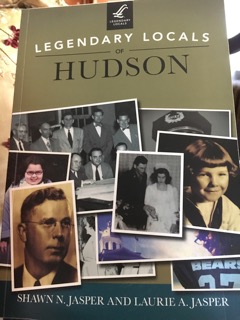
Legendary Locals of Hudson, NH by Shawn and Laurie Jasper $21.99
Two book set, Webster’s History of Hudson, NH 1673-1913 and Town in Transition 1913-1977 $95.00.
Please send your order and shipping address along with a check made payable to Hudson Historical Society P.O. Box 475 Hudson, NH 03051.
Thank you!!
Tiny’s Garage Atwood Avenue
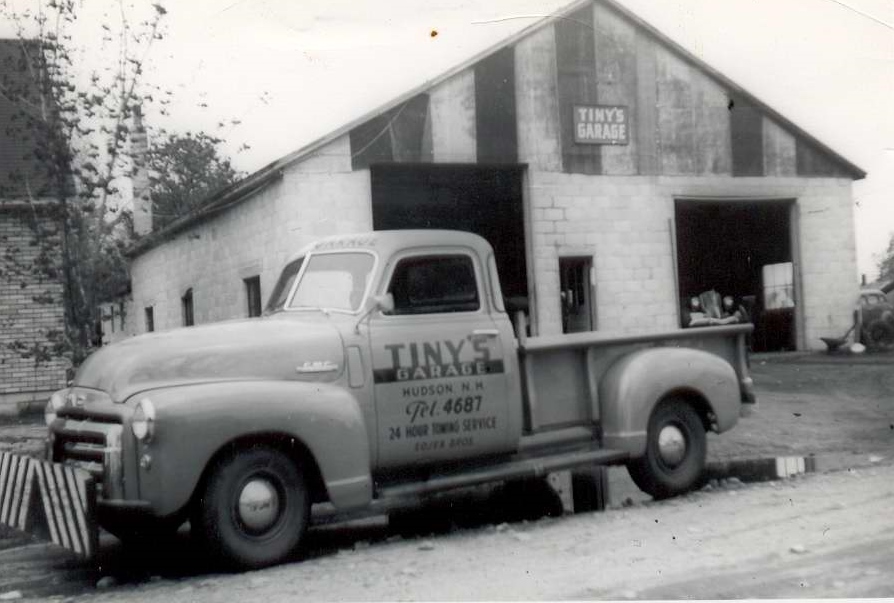
Tiny’s Garage Atwood Avenue
Mellen Farm Barretts Hill Road C 1960
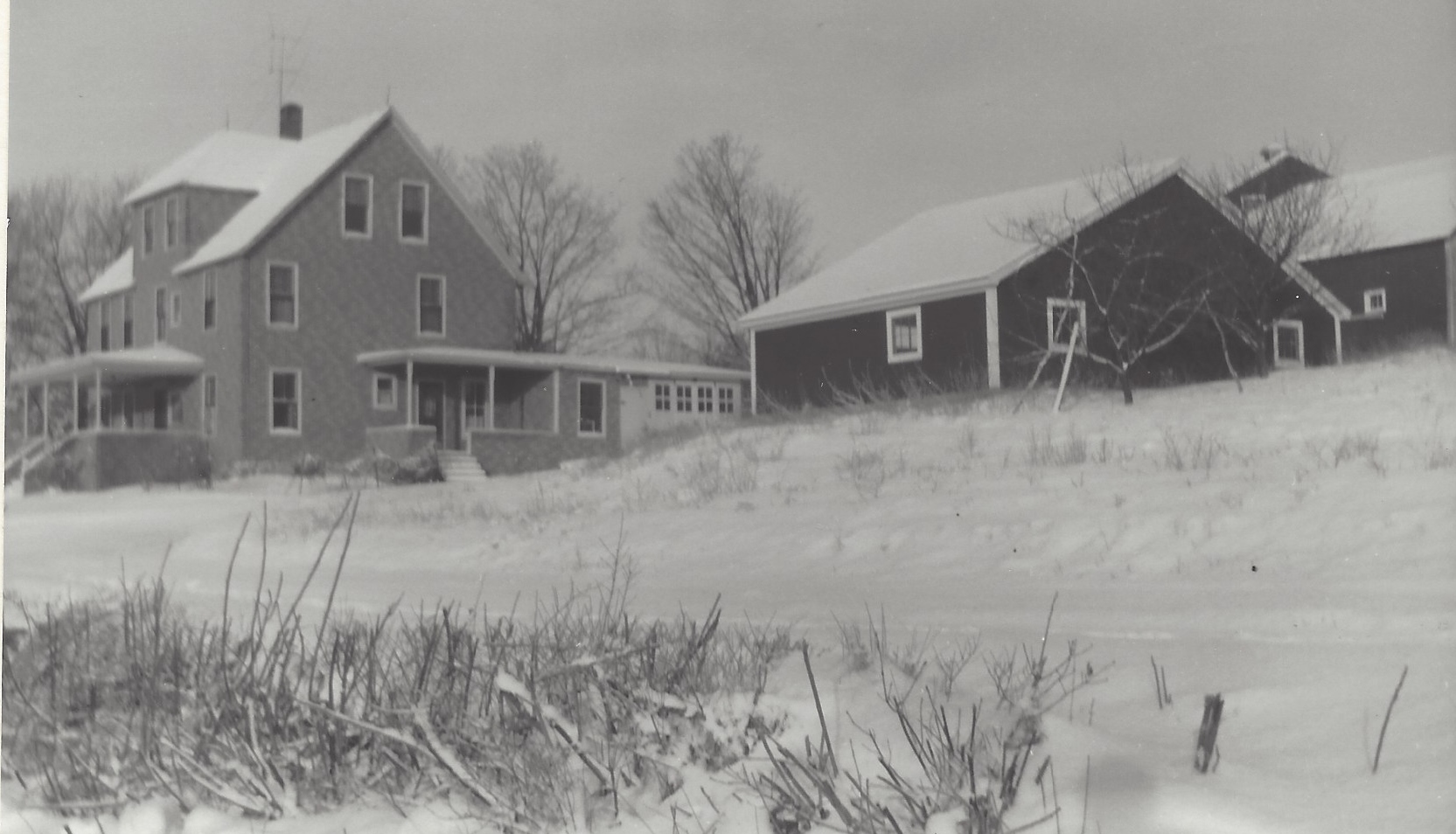
Mellen Farmhouse C 1960

Mellen Farm Pasture C 1960
H. E. Smith and Sons Farm Stand C1980
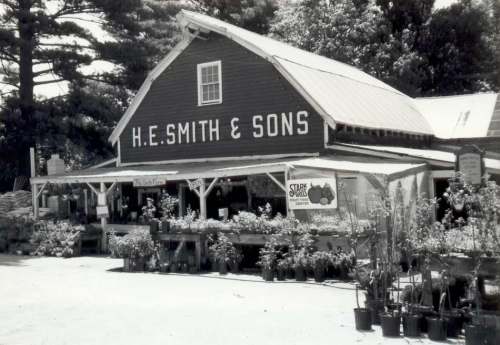
H.E. Smith and Sons Farm Stand C1980
 Remember Hudson NH When...