Hidden Piece of Alvirne School History
We are familiar with the memorable Alvirne School session held at the Alvirne Summer House and the Alvirne Farm from May to August of 1948. This summer session was aimed at showing the feasibility of a school in Hudson as proposed by the will of Dr. Alfred K. Hills. When the summer school ended, the court findings relative to the trust funds left by Dr. Hills and Mary Creutzborg were still under litigation. This litigation continued until spring of 1949; at which time Hudson proceeded with the design and construction of the Alvirne building which was opened as a junior-senior high school in September 1950.
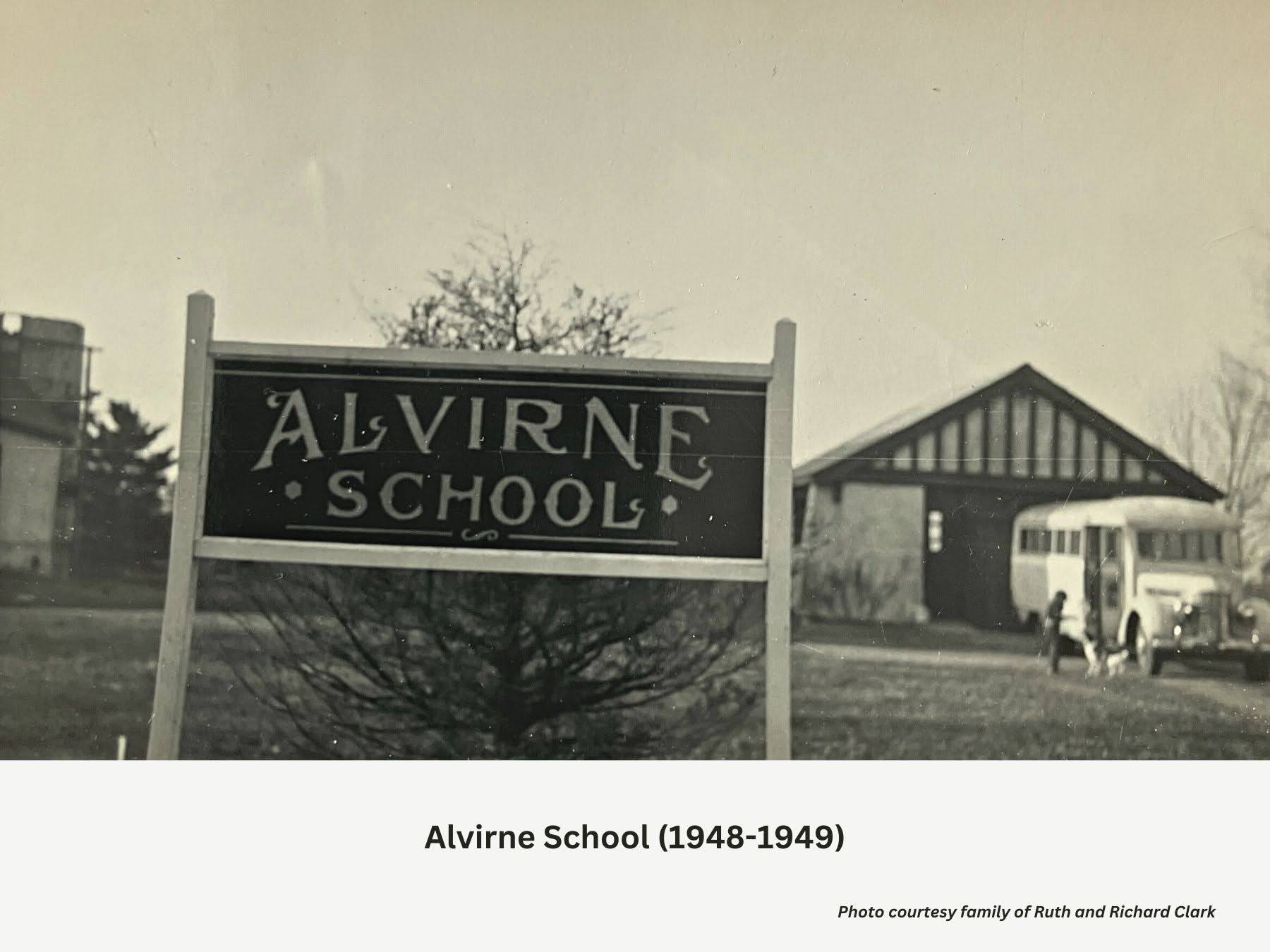
As the result of documentation provided to us from the family of Richard and Ruth Clark, plus some research into Hudson School Reports and the Nashua Telegraph, we find that classes at Alvirne School did not end with the summer session. A class in agriculture was held at Alvirne School under the direction and leadership of Herbert Canfield, Superintendent, and Ralph Linton, Principal of the Junior High School. Here is that story.
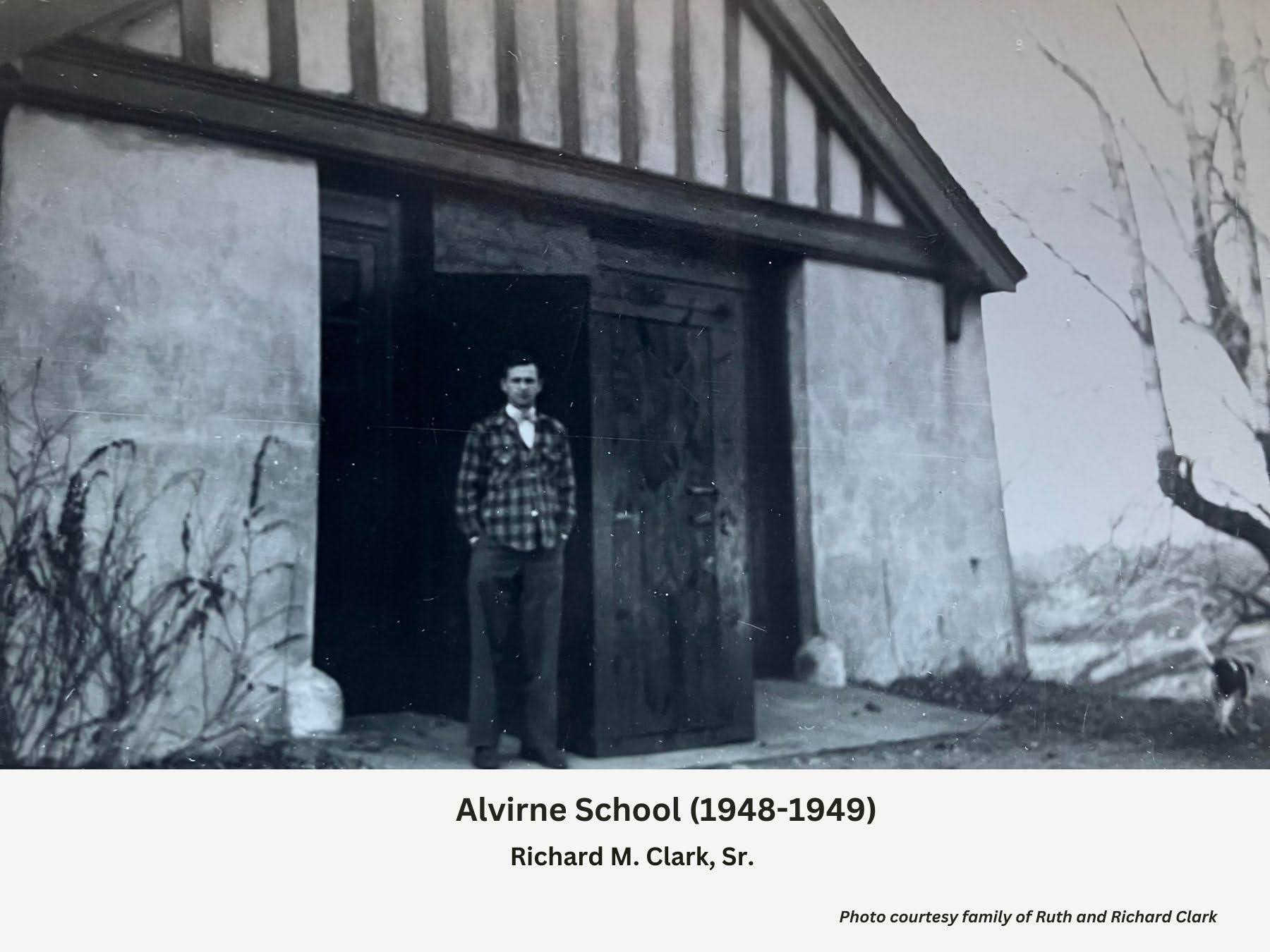
Richard Clark of Manchester, a UNH senior studying agriculture education under the GI bill, was engaged by the Hudson School District to teach agriculture at Alvirne School. The second floor of the Lyons House (now the Alvirne farmhouse) was remodeled to provide an apartment for him, his wife Ruth (Preston) and young son Richard, Jr. They moved to Hudson sometime after September 16, 1948. The fall term began October 4, 1948. Standards for work in agriculture, home economics, and industry were set up by the school district. Morning and afternoon sessions were set up for the 16 students enrolled. Based upon the class record kept by Mr. Clark these students were:
W. Boulanger (Wesley)
W. Boucher (Wildred)
G. Dearborn (Gregory)
J. Forrence (John)
E. Grohosky (Edward)
R, Hovling (Ronald)
J. MacCann (John)
R. Mondoux (Raymond)
N. Moreau (Norman)
T. Pierce (Theodore)
L. Rowell (Louis)
M. Ruiter (Miles)
G. St Laurent (Gerard)
C. Stultz (Clifton)
J. Warren (John)
P. Warren (Paul)
Richard was assigned a carriage shed adjacent to the barn as his school room and headquarters. Students were bused to Alvirne by Mr. Oliver. Mr Clark along with his students converted this utility shed into a classroom. It was commented that his students called him the principal, teacher, and janitor of Alvirne School.
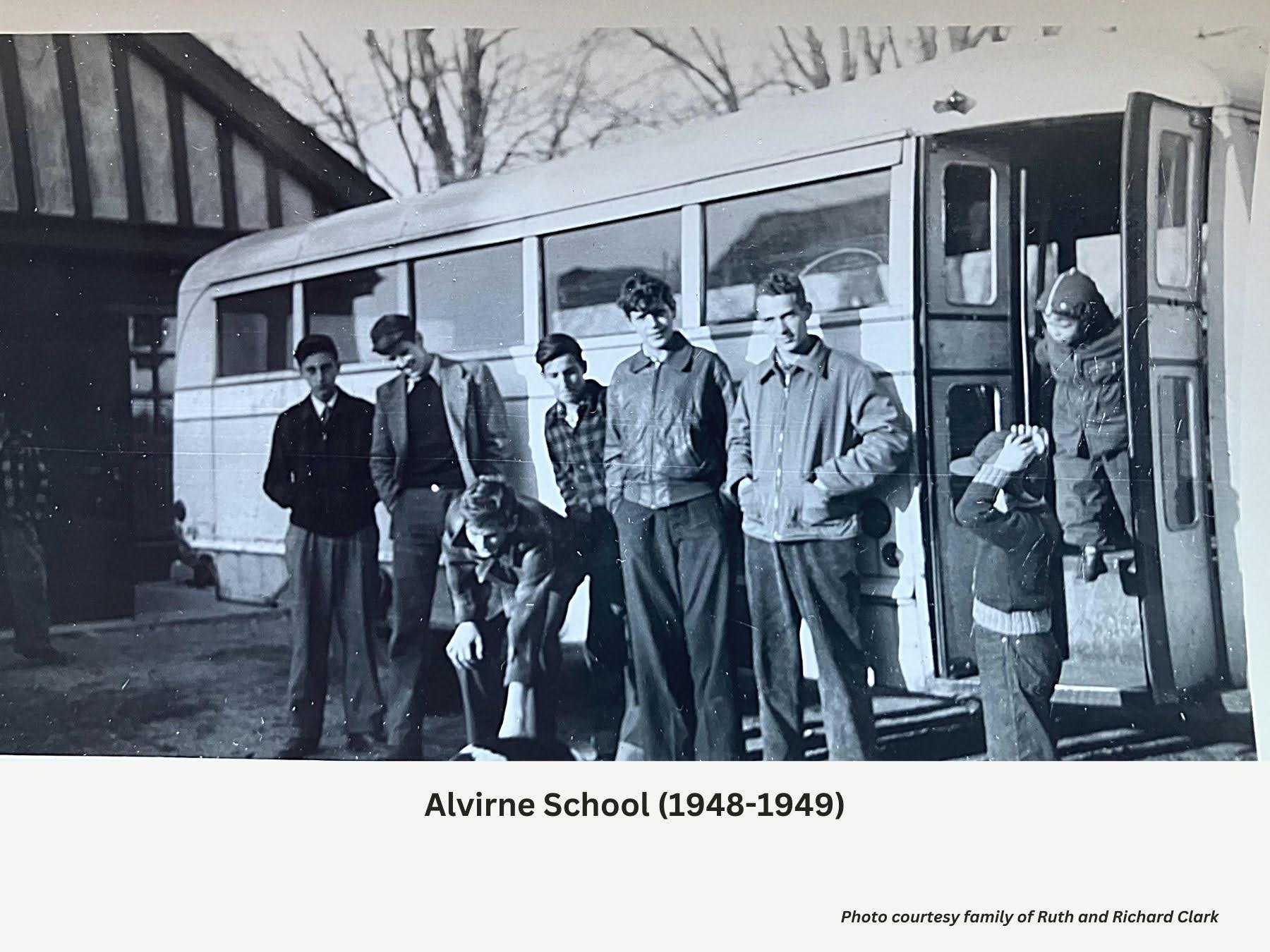
By January 1949 Richard Clark and the vocational agriculture students became more visible to the town of Hudson and the organizations within the town. On January 17 there was an informal gathering at the Hudson Junior High school of parents and friends with Richard Clark, teacher of agriculture at Alvirne School presiding. He introduced Earl Little of the State Department of Education who spoke on vocational agriculture in NH. Superintendent Canfield spoke briefly on the type of school being established in Hudson.
This same month 16 of the Voc Ag students enjoyed a field trip to Concord visiting the barns of the NH Breeding Association and the mill of the Merrimack Farmers Exchange where grain is ground and mixed for feed. They were accompanied by Mr. Canfield, Mr. Clark, and Edward S. Lyon of the Hills Estate.
In February 13 students competed in a speaking contest held at Wattannick Grange; the first held in connection with the FFA program. Prizes were awarded and the local winner would compete at the state level. First place was awarded to John Warren, age 14, whose topic was “Jersey Cattle”. Second place went to Norman Moreau, age 15, whose topic was “Dairy Farming”. Third place went to Clifton Stultz, age 17, on the topic of “Part Time Farming”. John Warren later competed at the state level and was awarded first place. Prizes for this contest were provided in silver dollars by the Hudson Lions Club.
Later in February and into the spring, Richard Clark was a speaker at both Hudson and Wattannick Granges in Hudson as well as the Pomona Grange; his topic was “The Vocational Agricultural course of the Alvirne School.
The Clarks remained in Hudson until his graduation from UNH. They celebrated the birth of their second son, John, on May 21, 1949.

This snipit of history is significant as it shows that classes at Alvirne did not end with summer school. They continued through to June 1949 with Mr. Clark. By September 1949 George Frizzell was teaching agriculture at Alvirne School. The Alvirne building was completed and dedicated September 1950 as a Junior/Senior High School with a Vocational Agriculture program. The farm and buildings of the Hills estate were a part of this school.

After graduation from UNH Richard secured a position with Grafton County 4-H program. He later returned to his family farm in Goffstown. This farm in Goffstown have since merged and currently being revitalized by later generations of the Clark family under the name of ClarkRidge Farm.
Research and written by Ruth Parker from the following documentation which was graciously provided by the family of Richard Clark.
1. A written narrative of Richard Clark’s time in Hudson as told to and written by his wife Ruth (Preston) Clark
2. Several photos showing Alvirne farm sigh, the utility building, students, school bus and driver.
3. Picture of baby John Clark born Hudson May 20, 1949) and his mother Ruth
4. A resume of Richard dated showing his prior work at Alvirne School.
5. Voucher showing a refund on rent for September 1948 when the Clarks moved to Hudson.
6. 1948 calendar for Oct-Dec showing the beginning of the school year and indications of his teaching plans.
7. Class records showing those students enrolled
8. Miscellaneous notes including correspondence with Supt. Canfield and Principal Linton.
9. Some original papers and test results from his students.
Remembering Tex Pointer
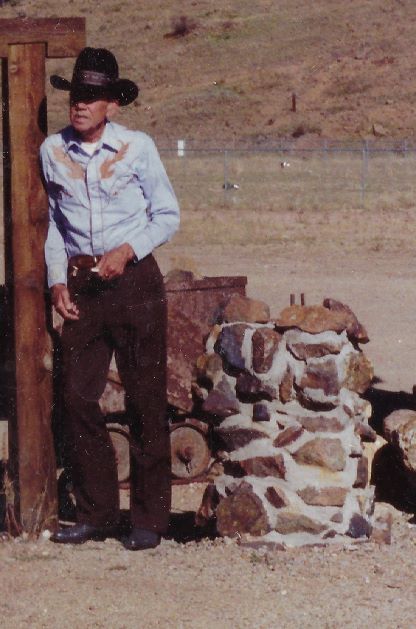
By Steve Kopiski
William Pointer was born in Ennis Texas in 1923. Common for young men of the time, he left home in his teens for independence and gainful employment, (and to gather the nickname “Tex”). His early years had him in the Western states and branching out for business, and ultimately answering the call to his generation, enlisting in the Navy in support of the war effort.
“Tex” Pointer couldn’t move through his careers or society in a manner you’d find typical. This was a time of struggle for most Americans, but Tex had crucial challenges. Conflict of identity and heritage, a persistent sense of guilt. He was able to partially unburden himself in his writings and carry on. A manuscript he wrote, published posthumously by his children is entitled “I Pass As White”. Tex Pointer was an African American man who lived as white in the America of the 1940s to the 1990s.
Best available estimates have Pointer and his small but growing family settling in Hudson @ 1957. Family memories have Tex as a fisherman, home builder, furniture craftsman, farmer, caterer, machinist, horseman, host of outings and events to name a few. Over time in town, this was a man you either knew personally or knew who he was on sight. Tall, thin, often in his cowboy hat and boots, and involved in whatever scene might be underway. In no way did he keep a low profile.
When researching a specific individual, local newspaper archives are a convenient resource, except perhaps when you search returns a few hundred mentions and by-lines. Tex maintained a frequent voice in matters of town planning and legislation, a voice more than once awarded the expression “Spoke at great length…” In January 1982, he commanded the front page of the newspaper with an account of his prepared speech (6 Pages!). Here on the subject of Planning Board matters, he stood against proposed changes placing rural spaces in residential zoning to inhibit industrial/retail sprawl. He also pressed for board members to be elected, rather than appointed by the selectmen (Tex himself an appointed planning board member of long standing.)
Then there was Water, getting in and out of it, getting over and around it, even managing its depth weighed on Pointer’s mind and moved his advocacy. Proper concrete public boat ramps for both Robinson Pond and the Merrimack River (Tex highly in favor,) involved sometimes years-long and even heated debate back and forth, and neither succeeded. In typical Tex fashion, he states “I don’t swim, and I don’t own a boat. I have no personal interest in this boat ramp” then launches into a half-page letter to the editor advocating the Merrimack River proposal. Then there was the critical control of the depth of Robinson Pond, the necessity of a dam, the issue of beavers building dams, even the rumors of clandestine dams constructed in secret by residents! And of course the long debated matter of additional bridge(s) to Nashua across the Merrimack going back to the early 1960s. Pointer was a member of a delegation to study, leading him to proclaim himself the “town’s most frequent user of the bridge”. The amount of leverage this permitted was not recorded. And while it’s true Tex was reliably outspoken on many issues, colleagues from the time recall his committed interest in what he felt was for the good of the town.
And who knew, for example, that in 1913, the first motorized truck in NH was owned by the “Hudson Volunteer Hose Co. #1”, later the Hudson Fire Dept.? Largely a volunteer force until the 1970s, in the early part of the 20th century, firefighters would pay $3 to join the brigade, buy all their own equipment, and pay fines for missing meetings, fire drills, and actual fires. Pointer laid out the whole history in four full-page installments serialized weekly in the then Hudson News. Also in that paper, Tex took the front page for his two-part history of the Presentation of Mary Academy. And on occasion, when humor took the place of history, Tex offered musings in the column “I Remember When…” where he’d poke fun at town foibles and citizenry (without naming names.)
Likewise, Tex was a reliable and prolific scribe for local publications, notably the Nashua Telegraph and Hudson (later, Hudson – Litchfield) News. “Twin Valley Area News” was a weekly feature in the Telegraph and for a good while in the mid-60s, Tex was its Hudson correspondent. Here he reported on political news, town happenings, social and charitable events and such.
Notable citizens engage their community. They participate and contribute their time and talents for its betterment. In an excerpt from cover notes in Tex’s book; “What if you could change the direction of your life? Would you have the strength to make the sacrifices to get there? Bill Pointer had that strength… every day was an uncertainty to Bill. His story is about the past and future of a race, as well as that of a person.” Overall it is instructive. Envisioning a place where judgment by appearance can be removed from our experience as Tex succeeded in demonstrating, what remains is our common humanity.
Acknowledgements: “I Pass as White” by William “Tex” Pointer is available at major on-line booksellers for interested readers. The Pointer family generously provided personal recollections and collected archives for this article. Written by Steve Kopiski, a member of the Genealogy and Research Committee of the Hudson Historical Society.
Hudson’s Boston Post Cane

Embossed Gold Head of Hudson’s Cane
The year was 1909. Edwin Atkins Grozier, owner and publisher of The Boston Post, launched his most famous and longest lasting advertising campaign to increase readership of his paper: The Boston Post Cane. A letter was sent to the chairman of the of selectmen in many New England towns. With this letter Mr. Grozier asked them to become trustees of a fine ebony cane with a top of 24-caret sheet gold. He stipulated the cane was to be given to the oldest citizen of the town. Upon the death of that citizen the cane was to be returned to the town and quickly transmitted to the next oldest citizen. The canes were separately expressed to each town.
Some time prior to August 1909 Mr. Grozier had arranged for the manufacture of some 700 canes by J. F. Fradley & Co. of New York, widely recognized for their fine canes. The cane itself was crafted from ebony grown in the Congo of Africa then brought here, cut into the desired length, and seasoned for 6 months. Good specimens were then turned on a lathe to the desired size and allowed to season again. They were then given a coat of shellac, rubbed with a pumice, and coated with French Varnish. Each town received an identical cane except for the name of the town embossed on the head of the cane. The cane for Hudson read: “The Boston Post to the Oldest Citizen of Hudson ” in the center. Around the top edge was “New Hampshire” and on the bottom “To be Transmitted’ This cane was not just an ornament, it was designed for daily use by the holder.
Within a few weeks Mr. Grozier made it clear who was eligible for the cane. The intention from the beginning was for the cane to be presented to the oldest citizen, meaning the oldest registered voter in the town. In 1909 women could not vote so the cane was presented to the oldest male voter in town. Even after women could register to vote most towns continued the tradition of presenting to the oldest male voter. As far as Hudson is concerned the award of the cane followed the original intent until 1999 when the Historical Society assumed the responsibility of presenting the cane.

Ebony Boston Post Cane
Mr. Grozier remained as owner of the newspaper until he passed suddenly in 1924 at which time his son Richard, also a newspaper man, took on the responsibility until 1946 when he also passed suddenly. The paper was then sold, circulation declined, and publication ended in 1956. What started as a campaign to increase circulation of the newspaper has turned into a century long tradition, outlasting the newspaper itself!
Hudson’s Selectmen in 1909 were James P. Howe, P. J. Connell, and George F. Blood. Soon after receiving the cane the selectmen presented it to Benjamin A. Merrill, Hudson’s first holder. Mr. Merrill passed in late October 1909; the cane was then presented to Hiram Cummings who held the cane until he passed January 7, 1910.
Some towns kept a record of the recipients of their cane. I have not found nor have I heard of any such early records being kept for Hudson. So, in an attempt to create such a list, I did some research. The remainder of this article shares my results.
Following Hiram Cummings (d:1910) research shown the honor was passed to Daniel Greeley (d:May 1916), Kimball Webster (d:June 1916), and Robert A. Andrews (d:1920). The next recipient I found was Clifton Buttrick who passed in May 1935 at the age of 89. Logic tells we there is an unknown recipient between Robert A. Andrews and Clifton Buttrick. Following Mr. Buttrick we have Willis P. Cummings (d:1939), Edwin Gowing (d:1940), David Monroe (d:1941), Charles L. Spaulding (d:1942), Charles Leslie (d:1948), Arthur S. Andrews (d:1949), Aldon Cummings (d:July 1950), Irven Smith (d:Aug 1950) and Charles Edward Cummings (d:1953). After the death of the younger Cummings brother in 1953 I found no further record of a presentation of the cane by the board of selectmen.
According to accession records of the Historical Society our Boston Post Cane was donated to the Historical Society by the Town of Hudson in 1971. It has been on display at the Hills House since that time; being used only occasionally for special presentations.
In 1999 the Society re-activated the tradition of the Boston Post Cane with updated eligibility rules. Both ladies and gentlemen are candidates with the requirement they be a resident of Hudson for the previous 20 years. The recipient is honored with a proclamation from the selectmen, a pin/tie clasp replica of the cane and his/her name engraved on a plaque. This presentation is made at the convenience of the recipient’s family.
Since 1999 we have 10 recipients. James Glispen was honored in 1999 at the age of 100. Lillian Leaor was Hudson’s first lady to receive the honor in 2005. Following Mrs. Leaor the recipients are: Ella Connell, Thelma Lemire, Ida Hill, Paul Wheeler, Mildred Emanuelson, Laura B. Landry, Clara Charest, and at present Doris Widebeck.
Before leaving the history of honoring our oldest residents I share a couple of events which occurred during the 1970’s. The first event was Founders Day in 1973; a week long celebration of the 300th anniversary of the founding of Dunstable. For this event Hudson sponsored a parade which proceeded from School Street down Lowell Road, to Jacques Field. Being the oldest native of Hudson Ralph Steele (d:1999) was selected as the Grand Marshall.
The second event was the Bi-centennial in 1976; again celebrated with a parade from School Street to the site of Memorial School. The grand marshal for this event was 96 year old William D. Tandy. Mr. Tandy(d:1978) had previously been recognized by the Hudson Lion’s Club as early as 1974 as the oldest man in Hudson.
If any readers have additional information or insights into missing Boston Post Cane recipients please contact me via email at HudsonHistorical@live.com. The photo of the cane was taken by Sue Misek and is part of our collection at the Hills House. Written by Ruth Parker this article appeared in the August 16, 2020 edition of the Nashua Telegraph.
EARLY DEVELOPMENT ON THIRD STREET
In 1892 the area along Ferry Street near what is now Third Street was largely undeveloped. A proposed street, named Belmont, was referenced in some area deeds. This article is about a parcel of land at the corner of Ferry and Belmont streets purchased in 1917 by Lucy (Lungarad) and Otis Robert Connell.
Otis was a Hudson native born July 1880, a son to Robert T. and Lizzie (Marshall) Connell. By November 1904 Otis and Lucy Lungarad, a native to Nova Scotia, were married and by November 1917 they purchased a 28,824 sq ft parcel of land at the former of Ferry and Belmont (now called Third) Streets from Edward J. Wells. Shortly after they proceeded to build this house at 6 Third Street, likely with help from his family. It was here from 1917 to 1939 that they lived and raised their family of two sons; Frederick and Maurice “Nick”; and one daughter; Edna Perl. Otis became a 35-year veteran worker with the Boston and Maine railroad as a yard man in Nashua. According to records it became necessary for Otis to place a mortgage on this property in 1937 and by 1939 the property was in foreclosure by the bank and a public auction scheduled. In January 1940 Hudson resident Roland Abbott purchased the property from People’s Building and Loan Association.
Otis Robert was a public servant to the town of Hudson. Elected to the Board of Selectmen in 1922, serving some 18 years until 1940 after which he announced he was not a candidate for re-election. He also served as our town’s first Overseer of the Poor. He was remembered by his fellow towns people for his quiet and unassuming disposition. Otis passed in March 1942. His wife Lucy remained in Hudson for several years and later moved to Vagge Village in Nashua. She passed in 1972. Otis and Lucy were laid to rest in the Connell family lot at Westview Cemetery.
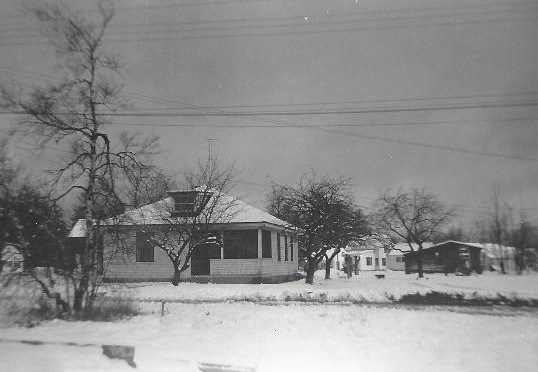
6 Third Street 1956
Hudson resident Dave Flewelling was 2 years old in 1940 when his parents Russell and Eunice (Porter) moved from Nashua into the house at 6 Third Street; a home they rented from the Abbott Family for more than 30 years. Russell and Eunice lived here until she passed in October 1969. Following her death, this continued to be his residence until about 1973 when Russell moved to live with their son, Dave, and his wife Carol who were living on Windham Road in Hudson. Dave and his brother Robert (B: 1943) grew, played, and attended Hudson schools from this home. Dave was a 1956 graduate of Alvirne and entered the service in 1958 where he served for 4 years. By 1964 Dave and Carol (Whittemore) were married. Carol’s parents Roy and Annamay (Doherty) Whittemore had moved into the Third Street community in 1951 when they built their home at 11 Third Street. This 1956 photo is courtesy of the Flewelling Family. Younger brother, Robert “Bobby” Flewelling was born in 1943 and was a 1961 graduate of Alvirne.
Getting back to the story of 6 Third Street, by May 1984 the original parcel of 28,824 sq ft was subdivided into 2 lots: 6 Third Street and 77 Ferry Street. The 6 Third Street property was then sold by the Abbott family to Joseph and Denise Cantin. Little is known of the house and who lived there for the next several years. By February 1995 it was in foreclosure and was purchased by John and Donna Holmes. The 1995 photo is courtesy of the Holmes Family and the 2019 photo is from the Town of Hudson records. It is currently the home of Donna Holmes, the owner and operator of Donna’s Place on Lowell Road.
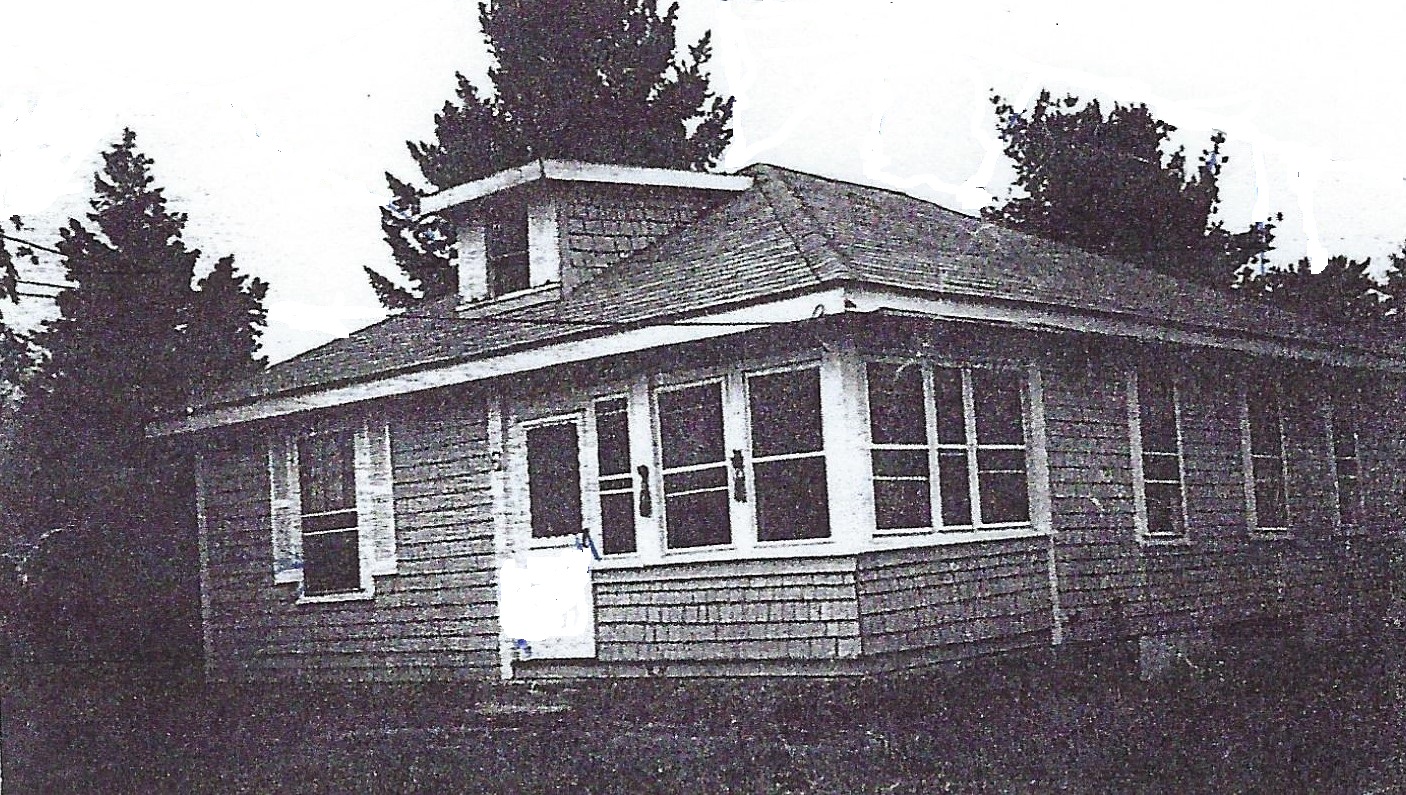
6 Third Street 1995
The house at 6 Third Street received several significant changes since it was purchased by the Holmes family. Entrance to the house is now from the side porch which has been opened and expanded. The front doorway which faced the street is now a bay window. The roof has been raised and re-shaped to provide more living space as well as an addition to the rear and side of the house.

6 Third 2019
Natural Descent of the Merrimack River

Iron Taylor’s Falls Bridge in Moonlight
Hudson’s western boundary is marked by a delightful section of the Merrimack River; stretching from Litchfield on the north, some 6.5 miles south to the state line with Ma. River crossings to Nashua occur at the Sagamore Bridge at the south near Walmart and at the Taylor’s Falls Bridge and Veterans Memorial Bridge near the Nashua River. There has been a Taylor’s Falls Bridge in this area since 1811. Initially a wooden toll bridge, then an iron bridge, a concrete bridge, and now the southern bridge of the twin span which dates to the 1970’s. So, the question is: Where were the Taylor Falls and what became of them?
The Pawtucket Falls in the Merrimack River at Lowell, MA was an important fishing ground for the Pennacook Indians during the pre-colonial times. “Pawtucket” is an Algonkian word meaning “at the falls in the river”. These falls were a barrier to commercial travel along the river to the early settlers, leading to the construction of the canal in the late 1700’s. In order to maximize the hydro-power and control the flow to the canal, a dam was built at the top of the falls in 1820 and expanded in 1840. The final structure exists in much to same form today, consisting of a stone dam topped with five foot wooded flash boards, This dam had the effect of raising the level of the river some 8 feet near the dam to 4 feet as far north as Cromwell Falls in Merrimack; eliminating any falls or rapids in the river from Lowell to Litchfield/Merrimack.
Besides the Pawtucket Falls there were three sets of rapids or waterfalls of significance to the early settlers; The Wicasuck Falls in Tyngsboro, the Taylor’s Falls in Hudson, and Cromwell’s Falls in Merrimack. The building of the Pawtucket Dam displaced each of these falls.
The Wicasuck Falls were about 4 miles north of Pawtucket where the river swept around a considerable island of the same name. This offered good fishing for the Indians and early settlers. The island played a significant part during King Philip’s War when Captain Jonathan Tyng “overlooked” a party of praying Indians that lived on this island for some 10 years thus keeping them out of the strife. In consideration of this the General Court of the Massachusetts Bay Colony granted this island to him in December 1693, It became known as Tyng’s Inland.
A series of rapids known as Taylor’s Falls were located some 8 miles north of Tyng’s Island and one mile south of the junction of the Nashua and the Merrimack Rivers which is located just north of the Taylor’s Falls Bridge; placing them a little over 1/2 mile below the bridge. John Taylor built a garrison on that part of the Joseph Hills grant that was deeded to Gershom Hills and later the Charles W. Spalding farm. This garrison was built behind the house toward the river. The Spalding farm house is now the site of Continental Academie on Derry Road. Little is known of this John Taylor except that the Taylor’s falls were most likely named for him and clearly the Taylor’s Falls Bridge was name for the falls.
Joseph Cromwell was an early fur trader in Old Dunstable on the Merrimack side of the river. The site of his trading post is identified by a marker between the Anheuser-Bush brewery and the Clydesdale Hamblet in Merrimack. Cromwell Falls was visited by Henry David Thorreau and his brother John in September 1839 and this visit chronicled in his book “A Week on the Concord and Merrimack Rivers”. In this book he stated that the Cromwell Falls were the first falls they met while traveling on the Merrimack; thus indicating that the river level had been raised by that date.
Today the smooth surface of the Merrimack gives no indication of the underlaying rapids and falls were eliminated between Pawtuck and Cromwell Falls. Most of the information in this brief article is from Webster’s History of Hudson. The photo of the Taylor’s Falls bridge in moonlight is from a post card within the collection of the Hudson Historical Society. Researched and written by Ruth Parker. This story was printed in the Nashua Telegraph April 5, 2020.
Baker Homes and Baker Street 1890’s
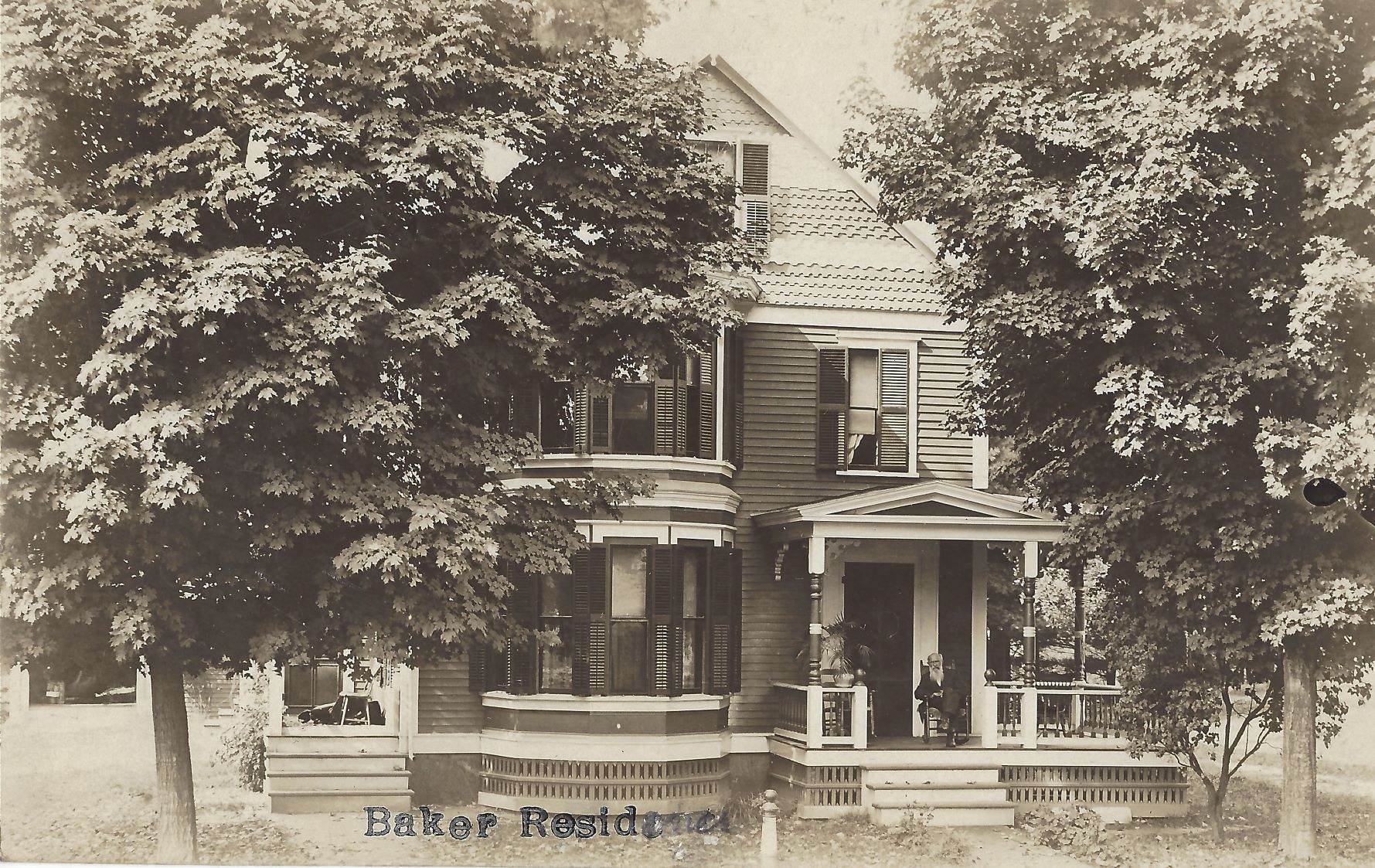
Early 1900 photo of Baker Residence at 4 Baker Street
Baker Street was laid out July 23, 1889 on land owned or previously owned by Kimball Webster. This street went from Main Street (now Ferry Street) near Derry Road and proceeded northward to land set aside for the Methodist Church parsonage and then eastward to Derry Road (now a part of Highland Street). By 1892 when the Hurd Atlas of New Hampshire towns was published there were only four houses on Baker Street; corresponding to 4, 6, 8, and 10 Baker Street of today. Each of these four homes were built between 1889 and 1892 by/for John H. Baker, Ezra A. Martin, Gerry Walker, and Abi A. Sanders restively. . A short time after 1892 a house was built on what is now 12 Baker Street and land at 13 Baker Street (now the corner with Highland Avenue) had been designated as the site of Methodist Church parsonage, replacing their parsonage which was destroyed by fire on Central Street a few years earlier.
Lovisa Underwood (Webster) and John Henry Baker moved from the Pembroke, NH area between 1856 and 1858 with their son John Julian. A daughter Mittie and a son William Wallace were later born in Hudson. John Henry was a stone cutter and a farmer. In October 1888 he purchased a 22,800 square foot lot from his brother-in-law, Kimball Webster. This lot was located near Derry Road on a proposed street to be named Baker Street. His Victorian style home was the first to be built on that street and it became the family home for 3 generations of Bakers. John Henry lived here for the duration of his life; passing in January 1916. His wife, Lovisa pre-deceased him in March 1900. They were laid to rest in Sunnyside Cemetery. This house became home to siblings Mittie and John Julian. Their other sibling, William Wallace, also resided here until his marriage to Sarah Lee Oldell in December 1899 about which time he secured the lot at 6 Baker Street.
After receiving their education John Jullian and William Wallace each spent a few years working for their uncle, Nathan Webster, in his grocery and grain business on Central Street. In 1890 these brothers became business partners as they took over the operation and ownership of the store.
John Julian passed in February 1942 at the age of 89 and Mittie passed in July 1949 at the age of 89. After settling the estate of Mittie Baker title for the home at 4 Baker Street went to her nephew, John Earl. John Earl lived there until August 1965 when the home was sold outside the Baker family to Fred and Hazel Felber. who owned it for 28 years until it was sold from her estate in 1993. In the intervening 26 years to the present time this property had had 3 owners. At the present time it is a 3 family complex.

William Wallace Baker Residence at 6 Baker Street C 1933
The first home at 6 Baker Street was built by Ezra A. Martin about 1889 and unfortunately destroyed by fire by in 1890. There is no evidence he rebuilt as the lot was taken over by William Wallace Baker and he built his own residence there in 1899. From this home William Wallace and Sarah (Oldall) Baker raised their family of 3 sons; John Earl (B:1901), Sidney (B:1902), and Walace Grant (B:1907). William Wallace and Sarah continued to reside here. He passed in December 1932 and by October 1941 the house was purchased by James and Ethel Hopwood. James was employed in Wilton, NH and Ethel was teacher in the Hudson School System; teaching primarily at Webster School. By the mid 1950’s they had retired. The Baker Street house was then sold to George A. Fuller and Roland Levesque in November 1961. It was converted to a multi-family residence and has since been owned by members of the Cassavaugh Family and now by Alexander Croker.
Our first photo is from an early 1900 post card of the John Henry residence. The second shows the William Wallace home decorated for the 1933 town bi-centennial. Researched and written by Ruth Parker and published May 3, 2020 in Nashua Telegraph.
Revisit Rural Hudson … Smith Farm Stand on Kimball Hill Road

H.E. Smith and Sons Farm Stand C1980
As we continue to revisit rural Hudson we stop at Smith Farm Stand on Kimball Hill Road.
With this week’s photo of The H.E. Smith Farm Stand on Kimball Hill Road we get to visit with another Smith Family in Hudson. By 1924 Elmer Frank and Ethel May (Connell) Smith and their young family of 2 sons (Henry Elmer and Robert Connell) and 2 daughters (Elizabeth Ella and Gloria Lillian) settled on a 300 acre parcel of land on what was then known as Pelham Road, now Kimball Hill Road. The location of the Smith parcel is at and near the intersection with Gibson Road and near the town line with Pelham.
Recently married Henry Elmer and Mary (Kayros) Smith began their dairy farm on a portion of his father’s land in 1933. At that time there were about 70 farms of various sizes in Hudson. Henry and Mary established their home around the corner of this farm stand on Gibson Road. Their they raised a family of 3 boys (Dustin, Tom, and Tim) and 1 girl (Nancy). The family continued with the dairy farm with all members helping out where they could. In 1963 they gave up dairy farming and switched to plants and vegetables and opened the farm stand as means to marketing their produce. This established a tradition which Henry’s son Tom has stayed with and has continued to the present with his own son, Dylan. Management of the farm and farm stand was passed from Henry to Tom in 1977.
Gloria and Elizabeth, sisters of Henry remained in Hudson after they married. Gloria continued to live on the family homestead and married Leslie Binks. Leslie was an animal trainer for Benson’s Wild Animal Farm; Gloria became became a prominent business woman and leader in Hudson. Her sister, Elizabeth married Richard Albee and they settled on Greeley Street; living there for many years and then moved to Alaska.
After raising their family Henry and Mary divided their home into 2 living quarters. Tom, his wife Tina, and their family lived there along side his parents. Henry passed in 1991 at 80 years of age; Mary passed in 2004 at the age of 94. Both remained on and helped with the work of the farm as long as they could. Today operating the farm remains a family affair: Tom, his wife Tina, their son Dylan, and a sister-in-law Charli. Tom’s daughters and his brother, Tim, helps with the operation from time to time.
The Smith Farm specializes in home grown vegetables and plants. It is estimated that over 90% of the products they sell were grown or started on their own farm. Often the stand will remains open through the holiday season specializing in holiday trees, wreaths, and kissing balls. The kissing balls are made by the Smith family; trees and wreaths are brought in from a reliable grower.
By February of next year work will begin in the various greenhouses starting a wide variety of veggies and flowers for both their own gardens and to sell in the farm stand as starter plants. When I talked with Tommy he said…”we’ll be here next year!!”
The Smith family has been farming on Kimball Hill Road since 1933. First Henry and Mary with help from their growing family. The oldest, a daughter Nancy, married and moved to Illinois and raised a family there. Dustin, the oldest brother, remained in the neighborhood and a close brother and friend with Tom, but opted for a different career path. He and his wife, Susan, began a computer business called ‘ComputerSmith’ in the 1980’s. Dustin lived nearby,just a quarter of a mile from brother Tom in the original Smith family homestead. Younger brother, Tim, lives in Hudson and helps with the work of the farm from time to time. The third generation, Diyan, works along with his father Tom.
The photo of the Henry E. Smith Farm Stand C 1980 is from the photo collection of the Hudson Historical Society.
The Family of John Henry Baker

Baker Block Decorated for 1933 Bicentenial
This is the first of two articles recalling the family of John Henry Baker and the ‘laying out’ and early development of Baker Street. This week we look at the descendants of John Henry and some of the contributions they made to our town.
John Henry was the first Baker of this line to move to Hudson. He was born in Manchester, NH November 1822 to Jesse and Sally (Howard) Baker. Jesse was a stone mason and a farmer and he resided in a number of places including Pelham, Windham, Manchester, and lastly Hudson.
By December 1846 John Henry married Lovisa Underwood Webster in Hudson. She was born in Pelham January 1824 a daughter of John and Hannah (Cummings) Webster and a sister to Nathan, Moses, and Kimball Webster. At the time of their marriage he was living in the Manchester area and after their marriage they remained until some time between 1856 and 1859. Like his father John Henry was a stone cutter. John and Livisa had two sons and two daughters. Their first child, Ida Ella, was born in Pembroke September 1853 and passed before her second birthday. Their second child, John Julian, was born in Pembroke August 1856. The remainder of their family was born in Hudson; a daughter Mittie born December 1859 and a son William Wallace born September 1865. After moving to Hudson John Henry continued his occupation as a stone cutter. In 1863 he registered for the Civil War draft as a stone cutter. By 1870 he was listed as a farmer. He attended the Methodist Episcopal Church here in Hudson and was on the committee to build the brick church in 1880 after fire had destroyed the church and parsonage on Central Street near Melendy Road. John Henry lived out the remainder of his 93 years as a farmer in Hudson. He passed in January 1916 and was laid to rest in Sunnyside Cemetery.

John Jullian C 1913
After moving to Hudson with his parents as a young child John Julian received his early education in the local district school, perhaps attending school at #8 District on Derry Road. His higher education was at the Nashua Literary Institution and Pembroke Academy. In 1876, at the age of 20, he began working for his uncle, Nathan Webster, as a clerk in his grocery and grain business. This employment lasted until 1885 when he was appointed to the U.S. railway mail service running between Boston and Keene, NH. Four year later he returned to Hudson.
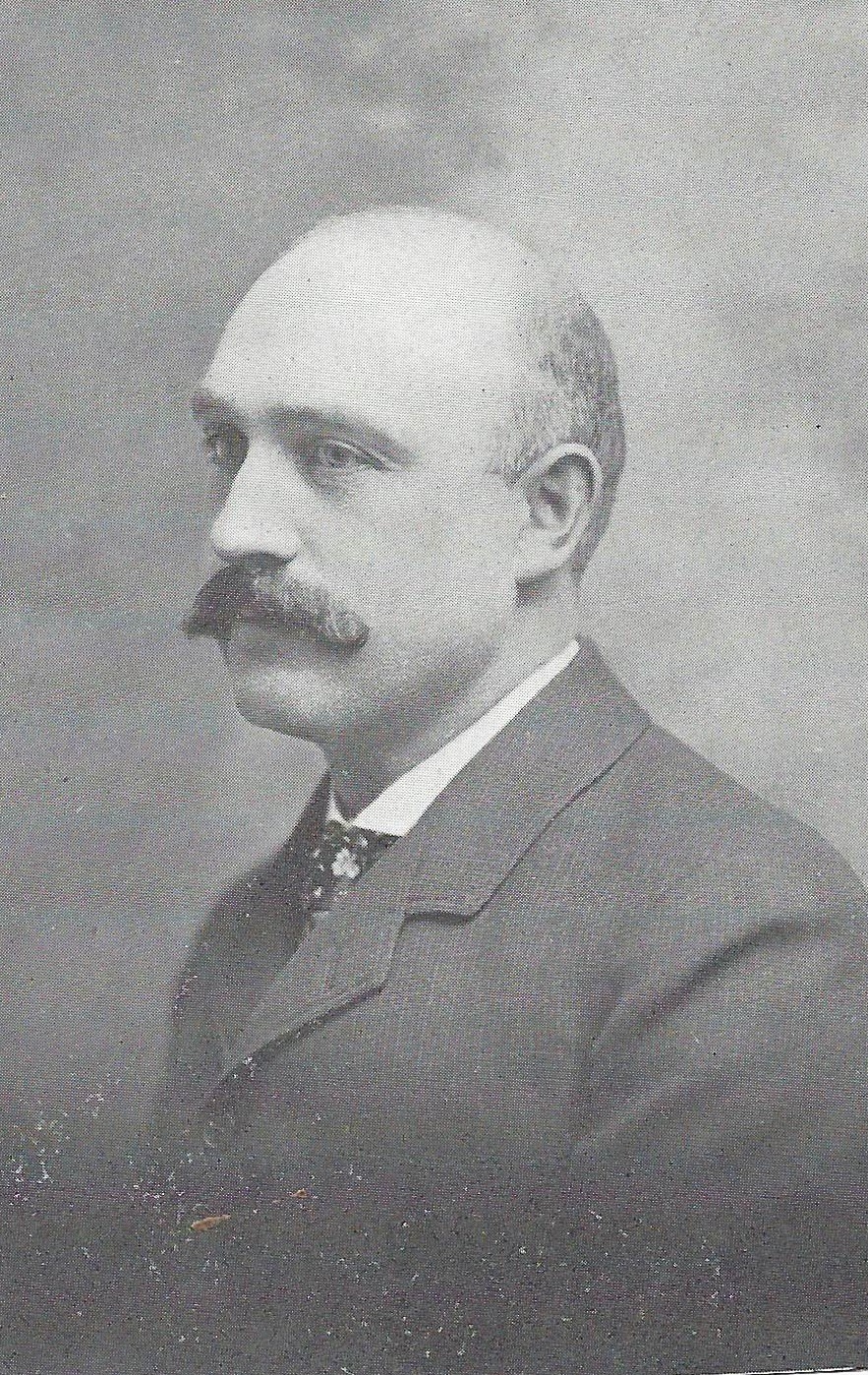
William Wallace C 1913
William Wallace received his early education in the local district school, perhaps attending the same #8 as his older brother John. William’s higher education was from the McGraw Institute in Reeds Ferry. In 1885, at the age of 20, he likewise entered the employ of his Uncle Nathan as a clerk and was soon appointed Assistant Post Master, a position he held until 1890.
In October 1890 brothers John Julian and William Wallace Baker took over and expanded the building and grocery business from their uncle. The Baker Brothers’ building was the location of the early post office at Hudson bridge when the Democrats were in office. When the Republicans were in office the Post Office would re-locate across the square in Daniels and Gilbert. The Bakers’ Building had a long history dating back to the 1860’s. Owners were James Carnes, then Nathan P. Webster, and then John J. and William W. Baker and later Sidney. After operating for two generations it was sold to the Rodgers Family of Hudson prior to being demolished as part of the bridge revitalization.
John Julian was elected town clerk and treasurer in 1892 and continued for 3 years. He was elected again in 1903 and continued as clerk and treasurer, with the exception of 1 year, until 1940. His total years of service as clerk and treasurer were over 40 years! In March 1940 he was honored by his town with a formal resolution for his service. John Julian passed February 1942 and was laid to rest with his family in Sunnyside Cemetery,
William Wallace and Sarah Lee (Oldall) Baker were married in Hudson December 1899. Their family consisted of three sons; John Earl (born February 1903), Sidney F. (born May 1905), and Wallace Grant (born February 1907). William Wallace passed December 1932 at the age of 67.
In the mid 1920’s John Earl took a trip to California and visited Hollywood. After returning home he started a theatrical production group called Hudson Players. He and Vera Tieiney married in November 1927. After his uncle, John Julian, retired as town clerk and treasurer, John Earl was elected. He converted an old roadside farm stand used by Vertner Fogg for the sale of veggies into an office from which he conducted his insurance business as well as his business as Town Clerk. He served as town clerk and tax collector until he passed in 1966, a total of 25 years!
Sidney F. was educated in Hudson and Nashua, graduating from Nashua High. He married Frances M. Slavin om June 1928. Sidney took on the operation of the family grocery store from his father, William Wallace. As a young man Sidney was active in the affairs of the town serving on Police and Fire Departments. After the passing of her brother-in-law Frances served as town clerk for 6 years and as tax collector for 4 years; after which time these positions were held by John P. Lawrence. Sidney and his family resided on Cutler Street in Hudson. Sidney passed May 1888 and was laid to rest in Hills Farm Cemetery.
Between John J., John E. and Frances the Baker family occupied the office of town clerk for 71 years from 1892 to 1972. Researched and written by Ruth M. Parker.
Revisit Hudson Rural Areas …Farmhouse at 99 Dracut Road
The Farmhouse at 99 Dracut Road 2004
This week we begin to revisit some of Hudson’s rural areas of the past. Farms and places of the past!! The first is the Oginskis/Karos Farm on Dracut Road.
Our Remember Hudson… travels this week take us to the south end of Hudson and 99 Dracut Road; for many years home to the Oginskis/Karos Family. The family of Joseph and Barbara (Martin) Oginskis purchased a farm of 57 acres plus house and barn from John Balandis on Old Lowell Road (now Dracut Road) in 1927. Their daughter Vera was about 22 years of age at the time. By 1940, Barbara was widowed; Vera was employed as a mill operator in Nashua. John Karos was residing at the farm and working as a farmhand. Four years later, in 1944, Vera and John were married.
This farmhouse at 99 Dracut Road remained home to Vera and John as well as to Barbara, Vera’s mom, who passed in December 1950. John worked as a machinist in Nashua, his last employment was with Sanders Associates. John passed in August 1966. Vera passed in 2004 at the age of 98. She lived all of her remaining live, except last few months, in this house; having been a Hudson resident for 75 years. I did not know Vera; but in talking with folks who did know her, she was a generous and respected neighbor. One neighbor remembers Vera’s kindness as she passed this home on her way to to catch the school bus a mile from her own home. Another person remembers Vera’s artistic talents and was able to save one of Vera’s paintings before the house was demolished. That painting is now at the Historical Society.

Hudson Meadows 2016
By 2004 all but 14 plus acres including dwelling and barns had been subdivided and sold. As part of her estate the remaining acres were sold to a developer and Hudson Meadows Condominium Association was soon established.
In the 13 years prior to 1927 this 57 acre farm with buildings had changed hands about 5 times. Going back to the early 1800’s this farm was purchased in 1824 by a Paul Hardy from Pelham, NH and it remained in the Hardy family until about 1913 when it was sold by his daughter Susan (Hardy) Cutter. From the age and style of the farmhouse I estimate it was built about 1850 by the Hardy Family.
The photo of the Karos Farmhouse is in the collection at the Historical Society compliments of Hudson Meadows Association. The photo of Hudson Meadows was taken in December 2016. Written and researched by Ruth M Parker.
Revisit Lowell Road … Camp Cayuga C1956
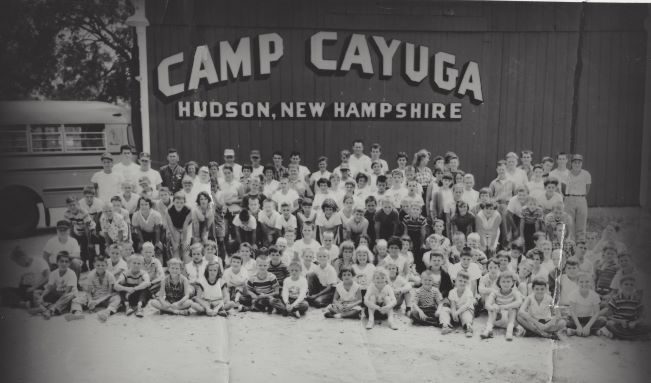
Camp Cayuga C 1956 Lowell Road
As early as 1956 boys and girls between the ages of 7 and 14 were bused, transported by car, or walked to Camp Cayuga on the Lowell Road in Hudson. Camp Cayuga, a summer day camp, was operated by John S. Groves on his family’s 265 acre farm. The camp activities started at 9 am and ended at 4 pm. Each camper brought their own lunch except on Thursdays when there was a noonday cookout. The camping season was 8 weeks, during the months of July and August. As many as 125 plus children came from towns like Milford, Amherst, Merrimack. Lowell, Chelmsford, Nashua and Hudson. Camp facilities included a large barn for a place of assembly, a swimming pond on the property which was recently dug by a bulldozer along a brook which ran thru the property, bath houses, Indian camps where campers divided into tribes, playing fields, horseback riding rinks, and woods for nature study. Horse back riding was one of the more popular events. special events,such as horse shows, carnivals, and fishing derbys, were often held.
The Groves farm was located on the western side of Lowell Road and extended to the Merrimack River. Until 1955 Mr. Groves had farmed the land and operated an automobile sales agency on the premises. He then turned from auto sales to teaching school. The idea of using the farm as a summer camp was suggested to him by a friend a few years earlier. The possibilities for expansion were considered as tremendous as within a 15 mile area there were 200,000 people and only 2 other day camps in the area.
Within a few years growth came to Lowell Road and with it an increase in property values. The State of New Hampshire had plans for a Circumferential Highway. By the early 1970’s the northern portion of this farm was used for the access road to the Sagamore Bridge. Of the remaining acres, the part abutting Lowell Road is the location of Sam’s Club; the back portion toward the river is part of The Green Meadows Golf Course, Photo courtesy of Leo Demers and now a part of the Historical Society Collection.
 Remember Hudson NH When...