Home » Lowell Road (Page 3)
Category Archives: Lowell Road
Revisit Winn Farm and the Restaurants at 49 Lowell Road
The farm fields of the Frank Winn farm stretched between what is now Winn Avenue and Winnhaven Drive at Lowell Road. Development included apartment buildings, candlepin bowing lanes, banks, and restaurants. Of particular interest to those familiar with Hudson is the series of restaurants which have existed at 49 Lowell Road. By my count there have been 10 different restaurants at this location since 1964. They are: Winstead, Hayward Farms, Pizza by Giovanni, Straw Hat, Primo’s, Ziggy’s, Stevie P’s, Yaght Club, Charmans, and SOHO. Did I miss any?

Home of Frank A. and Effie May Winn
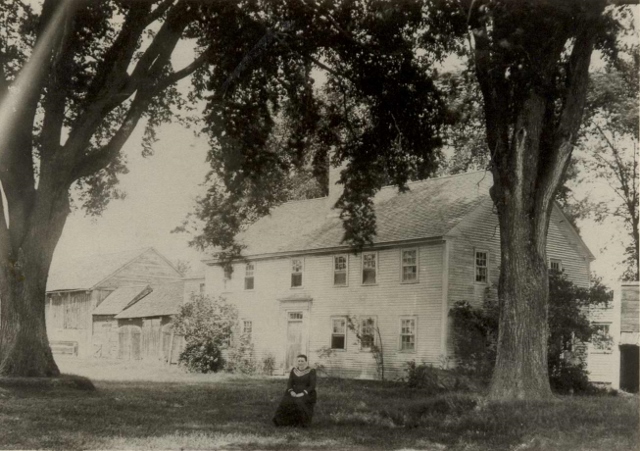
This week we visit the homestead of Frank Almon and Effie May (Wyeth) Winn on Lowell Road. Frank moved to Hudson from Pelham with his parents, Franklin A. and Lizzie Winn, about 1883 when he was 8 years old. His family purchased a farm of over 70 acres which stretched from Lowell Road to the river. Across one part of the farm was a large brook which traveled through fields and woods, making it’s course through the rocky gorge to the river. This is where Frank played, grew, and worked with his family. By today’s landmarks, this farm includes most, if not all of , the land between Winn Avenue and Winnhaven Drive (between 35 and 49 Lowell Road) and extending westward to the river. Between these roads and adjacent to Lowell Road was a large tilled field for growing vegetables for market. The family home with the large attached barn was located at what is now 1 Winn Avenue and faced this field. On December 24, 1958 the barn was destroyed by a spectacular fire. The fire fighters were able to save the house.
As a young man Frank made his way across the United States, but he soon returned to his home here in Hudson. Along with his parents, he tilled the farm fields all his life. In due time he came into possession of the farm. In September 1915 he and Effie May Wyeth were married; and it is here that they raised their family. Frank was a tireless worker with both his hands and his head. He not only knew about agriculture, he also knew about the wider world of business and economics.
Effie May was born in Nashua, May 1886, and educated in Nashua schools and Keene Normal School. Prior to their marriage in 1915, she taught school in Nashua. She later did substitute teaching in Hudson, Pelham, Merrimack, and Nashua. Frank and Effie May raised a family of 3 girls; Lillian Emma (b: about 1918), Effie May (b: about 1921) and Frances (b: about 1923).
Frank passed in September 1935, at the early age of 60; Effie May and her daughters continued to live at the homestead. By the end of 1942 all three daughters were married. Lilliam Emma was married to Walter Schindler; Effie May married Clayton Oban; and Frances Stebbins married Alton Drown. Mrs. Winn, Effie May, was a resident of Hudson most of her 97 years. She passed in 1983 at the home of her daughter Frances (Drown) Hosmer, with whom she had lived for a few years. Many Hudson residents remember Effie May; particularly with her involvement with the Hudson Fortnightly Club for over 50 years.
As time advanced and the land usage changed, the Frank A. Winn farm was developed. At first with the apartments and residential buildings in wooded area and adjacent to the river. Later the farm field between Winn Avenue and Winnhaven Drive were developed. The earliest development occurred in 1963 with the construction of LNL Bowl at what is now 8 Winn Avenue. Named for the three owners: Earl Libby, Leon Noel, and Adrien Labrie; LNL bowl offered candlepin bowling lanes, a sport unique to New England, The lanes operated until 1978. By 1979 this site became the home of Dessault Engineering Associates. It is now home to Opti-Sciences.
By 1964 construction began for the first of many restaurants to operate at 49 Lowell Road, likely owned by members of the Winn Family. The Winstead Restaurant began operation in 1965. By 1969 this was the site of Hayward Farms Restaurant. Over the succeeding years a number of restaurants were located here. From what I can piece together the list is as follows: 1972 – Pizza by Giovanni; 1980 Straw Hat Restaurant; 1984 Primo’s. Following Primo’s there were Ziggy’s, Stevie P’s, Yaght Club, Charman’s, and presently SOHO.
Construction for Nashua Federal Savings and Loan at 45 Lowell Road began in 1979. A bank has remained at this site; becoming Bank of America and more recently Enterprise Bank.
The “Bee Hive” on Central Street
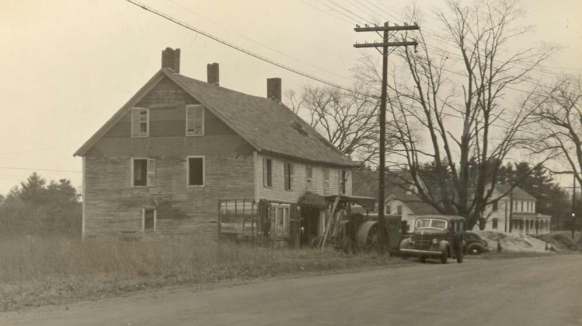
The “Bee Hive” on Central Street
We’ve heard the expression “A picture is worth a thousand words”. That is the case with this early 1940’s photo of the house, known as “the bee hive” located on what is now 73 Central Street; opposite what many remember as the home of Leon and Gerri Hammond. To the right and slightly behind this house we see two homes; the right most of these is located at 65 Central Street, home to Henry Frenette. The second, smaller home, is at 1 Lowell Road and home to Alfred Bastien.
A few first hand memories have been documented about the “bee hive”. The first is from Maurice “Nick” Connell who grew up in Hudson and later recorded some of his memories via a series of occasional articles in The Hudson News. In one such article (August 24, 1984) “Nick” recalls the “going’ swimmin'” routine of his gang of friends in the 1930’s. They would swim and dive in the Merrimack River near the railroad bridge abutments; then walk the tracks to the Lowell Road underpass and explore the “old haunted house” on Central Street near the overpass. He remembered this two storied, weather beaten structure also known as the “bee hive”. This nickname was applied to the house because of the strange and shady goings on there. This reputation added to the excitement of the barefoot summertime explorations of a group of young boys. They would walk the tracks to Melendy Pond, another popular “swimmin hole”. According to Nick, this house was torched by some unnown arsonist on November 1, 1945 and torn down on November 27, 1945.
Another memory of this house was left by Leo J. Gagnon. He recalled Anton’s restaurant and their parking area on the opposite side of Central Street – where a house called the ‘bee hive” once existed. By his memory this house was a half-way house. Other memories I have heard suggest it was a frequent and convenient “overnight” stop for individuals catching a free ride on the train as it passed through Hudson then on to West Windham, and Rochester, NH.
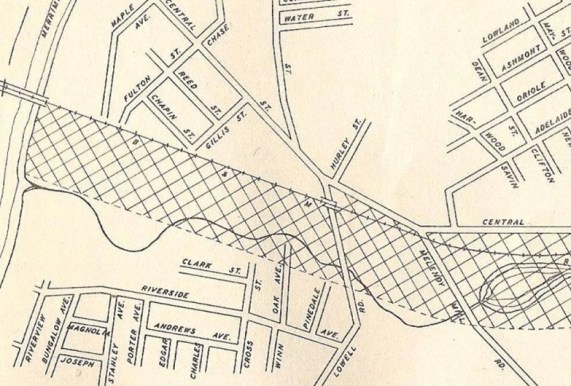
1942 Hudson Zoning Map
Speaking of the railroad, the second photo shows a portion of the Hudson zoning map for 1942 from the Hudson Town Report. This map traces the route of the steam railroad from the river to the overpass at Lowell Road where the tracks crossed over Lowell Road and ran behind the ‘bee hive” house and continued on to Melendy Road, “Long crossing” and Hudson Center.
A few additional details are known about this house. According to the town report for 1947, the Walton land on which was situated the so called “bee hive” was purchased (at least in part) by the Town of Hudson from the State of NH.
By 1870, and possibly before, this house was home to Samuel Walton, (age 49), his wife Fanny (age 48), and their daughter Sarah (age 21) and son James (age 19). Samuel was born about 1817 in England and was employed in a shingle mill. Based upon census records Samuel lived here until his death in February 1892, at which time the home was passed to his daughter, Susan (Walton) Brown, and his son, James Walton. His wife, Fanny had predeceased him by a year. At the time of his death he had an ownership interest in the Melendy Mills. With Central Street in your front yard and the railroad tracks in your back yard, the lot upon which this house existed was likely reduced in size and attraction through the years. By 1897, Susan and James sold the house to William Fitzgerald of Nashua. Samuel Walton purchased the property from Joseph Fuller and Fred Steele in 1868. After being sold by members of the Walton Family this house had a variety of owners, tax issues, and foreclosures.
In February 1999 in an effort to remember those fire fighters who had fought and those who have fallen the Hudson Fire Department announced they were seeking to build a new and larger memorial. A modest memorial for fallen firefighter James Taylor did exist in front of the Library Street Station. Their plan was for a larger memorial which would be dedicated to all men and women of the Hudson Fire Department. A Memorial Committee, chaired by David Moran was organized and they proceeded to design and raise funds for such a memorial. The committee reached out to town and school officials for a suitable location. A number of sites were considered and by April 2000, their plans had cleared the final hurdle. Ground breaking began and by May 21, 2000 the Hudson Fireman’s Memorial was dedicated upon a grassy knoll at the intersection of Central Street and Lowell Road. The location of this memorial has been named Hammond Park in memory of firefighter and neighbor Leon Hammond. Hammond Park and the fireman’s memorial is located upon or near the site of the Samuel Walton home, more recently known as the “bee hive”.
Scottie Industries on Roosevelt Avenue

Scottie Industries Roosevelt Ave. C 1975
Frank A. Winn Farm on Lowell Road
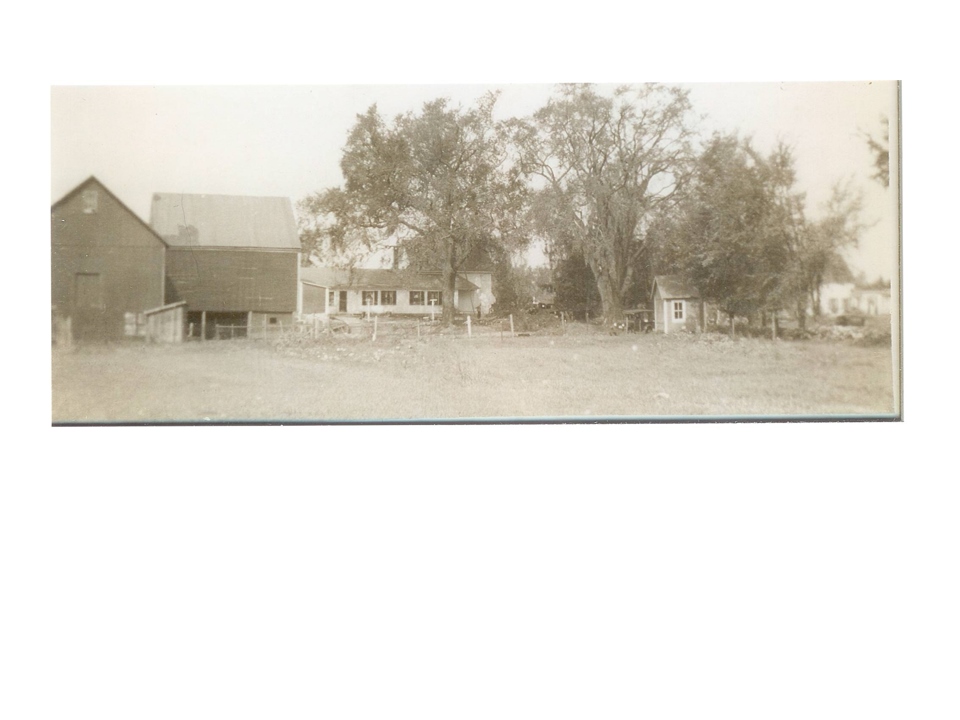
Home of Frank A, and Effie May Winn
Blodgett Cemetery

Blodgett Gate at Pelham and Lowell Roads
Our next cemetery to visit is the Blodgett Cemetery, located on Pelham Road at the intersection with Lowell Road and about 1 1/2 miles south of the Taylor Falls and Memorial Bridges. It is the third burial yard, in order of age, in Hudson. It contains about 1 acre of land and was acquired by the town on or before 1748 from Benjamin Whittemore for a meeting house and public uses. The state boundary with Massachusetts was established in 1746, leaving the residents of town in need of a meeting house site more central to it’s people. This site was selected and by 1748 the second meeting house was erected by the town. Kimball Webster in his History of Hudson describes the site of the meeting house as on the south side of the yard and near the present gate of the cemetery. The burial plots were the church yard, surrounding the house on the rear and on both ends.
In time the meeting house was moved away, and the No 4 school house built on the site. By the winter of 1855 the school house burned. Prior to this time a question was raised about the town’s title to this lot on the north side. At the town meeting of 1839 the town appointed a special committee of Thomas Wason, Jeremiah Smith, and Daniel Davis to investigate. This committee met with Reuban Greeley, Esq. the abutter on the north end. After this meeting, all parties agreed to establish an east west boundary on the north side of the town owned land.
After the schoolhouse fire in 1855 that site was abandoned in favor of a location nearby. As the land upon which the schoolhouse had stood belonged to the town it was added to the cemetery and a short time later a cemetery association was organized. The yard was then enclosed by a stone wall with an iron gate. The grounds were cleared of bushes and rubbish and other improvements were made. Family lots were located and laid out using the vacant grounds. Unfortunately, either from carelessness or willfulness, new lots were plotted upon grounds of some ancient graves and they were obliterated. In Webster’s History he reported this as inexcusable and lacking the respect which should have been due to these early settlers.
The most ancient date found among the inscriptions of this place is that of Priscilla Chase who passed October 5, 1749. The most frequent surnames found on the headstones are Blodgett, Greeley, Burns, Chase, Pollard, Winn, Wason, Hale, Caldwell, Page, Wilson, Cross, Merrill, and Burbank.
Within this cemetery are four generations of Blodgetts with the name Joseph. Joseph, born 1760, served in the Battle of Bennington in 1777. Being a lad of 17 he did not receive credit for his service at either the local or the national level until 2007, some 229 years later. His service has since been registered at the national level by Ruth (Baldwin) Williams, a descendant of his from Oak Forest, IL. when she applied for membership is the Daughters of the American Revolution (DAR). Young Joseph served with his father and the records for his service were credited to his father. His grave site in Blodgett Cemetery received a Revolutionary Soldier marker at a Memorial Day ceremony in 2007. Mrs. Williams coordinated this event with the Cemetery trustees, the American Legion of Hudson, and the Hudson Historical Society.
The photo shows the gate into this cemetery in 2007 and is part of the Historical Society collection.
St. Kathryn’s Church

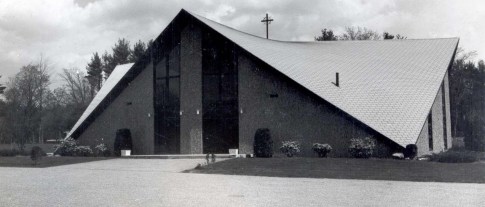
St Kathryn’s Church C1977
Tiny’s Garage Atwood Avenue
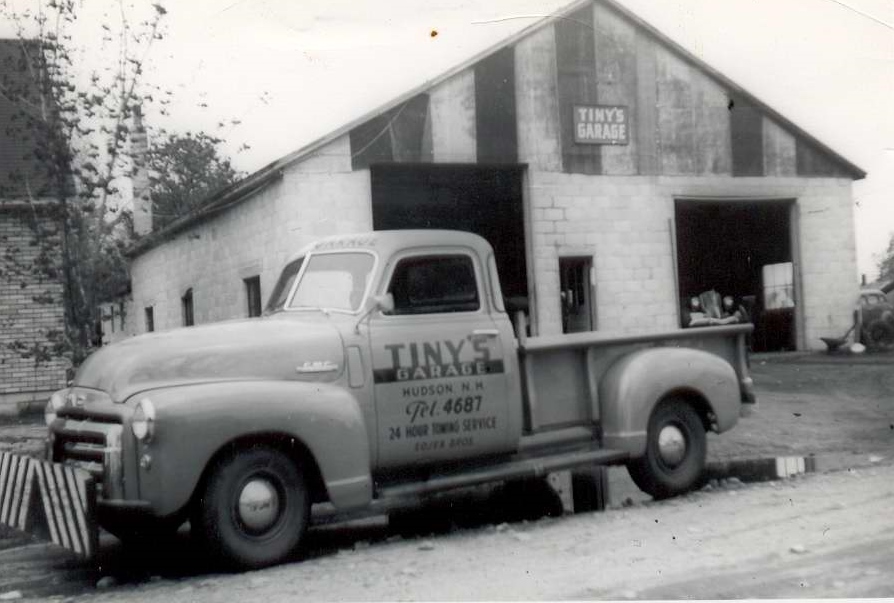
Tiny’s Garage Atwood Avenue
Hudson Shopping Center
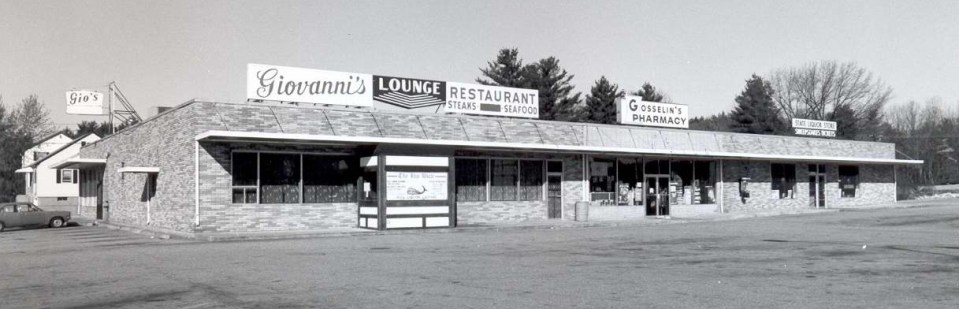
Hudson Shopping Center C1977
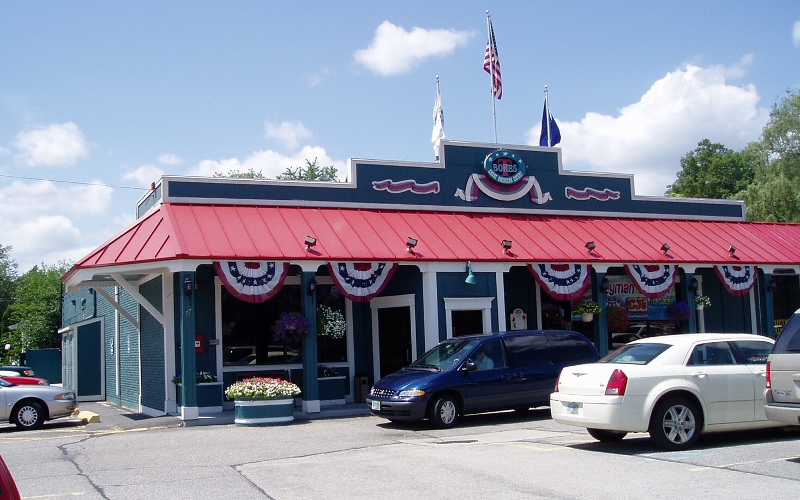
TBones Plaza 2006
Hudson Super Duper Market
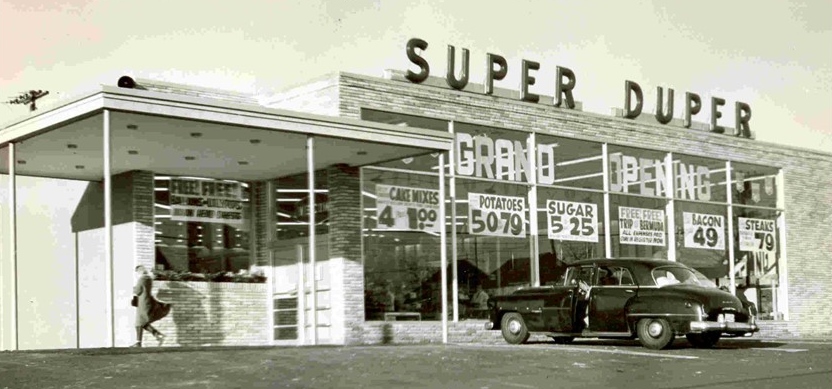
Hudson Super Duper C 1970

Citizen’s Plaza 2006
The Captain Joseph Blodgett House C1899
Captain Joseph Blodgett House C1899
 Remember Hudson NH When...