Home » Personalities
Category Archives: Personalities
Story Behind H. O. Smith Elementary
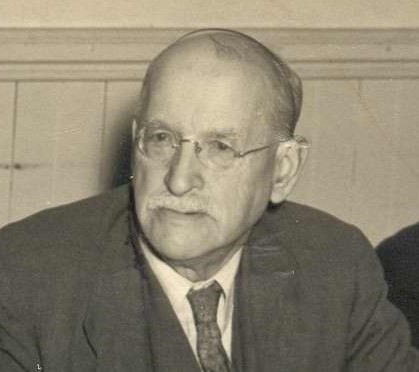
Dr. H O Smith c1940
Have you ever wondered about the history behind the H. O. Smith Elementary School and the family background of Dr. Smith?
During the dedication of the Hudson Junior High School on November 5. 1939 long time School Board Member Dr. H.O. Smith provided a brief educational history of Hudson. The first school in town dates to 1766 when 15 pounds was voted by the citizens of Nottingham West for education. Five years later the sum was reduced to eight pounds and during the Revolutionary War no sum of money was allocated for that purpose. The town was divided into ten districts with each district responsible to provide a location for class and salary for the teacher. Since, for the most part, pupils walked to school these districts divided the town by residential groupings and the school house conveniently located within each district. At first private homes were used for classrooms.

Hudson’s First Schoolhouse
The first school building was built in 1806 at or near the crest of Kimball Hill. This was district #5, known as the Center District, Other district buildings were built and soon after 1810 there were 10 district houses located in town.
Not until 1847 were the number of pupils recorded. At that time there were 346 pupils and the education costs totaled $433; approximately $1.25 per pupil! The teaching staff consisted of men and women. Men were typically hired for the winter months and women for the summer months. Men teachers received between $16 and $18 per month which was significantly more than the salary for a woman teacher. There was a town wide committee which reviewed the qualifications of and issued certificates for the teachers.
This concept of local management of the schools continued until 1885 when the town voted to operate as a single district and the first School Board consisting of Kimball Webster, Dr David O. Smith, and Daniel Gage was selected. Hudson was one of the few towns to adopt this system before it became a state requirement. Under the town system use of the local schools were continued; they were phased out over time as new or expanded facilities were available.
By 1935 all Hudson pupils in grades 1-8 were educated at either Kimball Webster School at the bridge or at a school at Hudson Center. Webster was built as a 4 room house in 1896 and later expanded to 8 in 1921. At the Center the D.O. Smith School was built in 1896 as a 2 room house on Windham Road. This school was destroyed by fire in 1907 and replaced by the Hudson Center School on Kimball Hill Road. Pupils in grades 9-12 were educated in Nashua with Hudson paying the tuition,
The completion of the Hudson Junior High School on School Street in 1939 near First Street provided 6 classrooms, an auditorium/gym, manual and domestic arts, an office, and a large study room. Upon graduation pupils would be eligible to attend any high school in the state. Hudson contracted with Nashua High School.
At the final assembly In June 1940 of the Hudson Junior High school there occurred a special ceremony which is remember to this day my members of Dr. H.O. Smith’s family, Dr. Smith was invited to come to this assembly and to bring his son and grandchildren with him so they might see the new school. The doctor was visibly overcome with emotion when his granddaughter, Elizabeth, unveiled a portrait of him at the climax of the program. This portrait was a gift to the school from a group of Hudson citizens as a tribute to Dr. Smith’s interest and dedication to the education and well being of the people of Hudson. The portrait was placed in a prominent place in the upper hallway of the school. It was attractively set in a walnut frame made by Bertram Tardif, Manual Arts teacher of the school. The wood for the frame originated from a discarded piano from the Hudson Center School. Placed there in 1940 it remains to this day. Accompanying Dr. Smith on that day was his son Dr. Deering Smith of Nashua and his granddaughter Elizabeth Deering Smith and grandson Robert Greeley Smith.
Dr. Henry Onslow Smith was born in Hudson December 1864. After graduating Nashua High School he attended Dartmouth college for two years and then entered Bellevue Hospital Medical college in New York. After completing his studies and a year of residency he returned to Hudson at the age of 24 in 1888 to begin his 57 year medical practice. In 1940 he was granted a degree of bachelor of arts by the Board of Trustees at Dartmouth college. In May 1945, after completing a house call for one of his patients, he passed suddenly.
Many knew him as Dr. Harry or as Dr. H.O. He was devoted to his medical profession and also to the education and affairs of the people of Hudson. One tribute to him stated “Dr. Smith himself was never old in spirit.” He greeted all ages as if they were his friends. He welcomed new residents and kept in touch with his old friends. He had a respect for the past and found great pleasure in genealogy and town and state history. I have a personal respect for Dr. H. O. when I reach for a book at the historical society which came from his personal library; often times finding annotations in his own handwriting which offer corrections or updating of the material written in the book.
Dr. Harry came from a family of physicians and educators. His father, Dr. David O. Smith was also a lifelong physician in Hudson and he served on Hudson’s first School Board. His brother Dr. Herbert L. Smith and his son Dr. Deering G. Smith practiced in Nashua. Two uncles from his mother’s family were also doctors. His father, Dr. David O. and his grandfather Alvan Smith served on the school committee. His parents were both school teachers in Hudson. In fact David O. Smith earned most of his money for his medical expenses by teaching a private school.
In 1951, after the completion of Alvirne the Junior High building was repurposed and dedicated as H. O. Smith Elementary.
Hudson is unique in that two physicians David O. and Henry O. Smith, father and son each served on the school board and each had a school named in their honor. It has been said and I will repeat it: Dr. Harry and the role he and his family played in Hudson cannot be matched. Thank you Doctors! These photos are from the collection of the Hudson Historical Society. Research and written by Carol Flewelling and Ruth Parker. Published in Nashua Telegraph June 28, 2020.
The Family of John Henry Baker

Baker Block Decorated for 1933 Bicentenial
This is the first of two articles recalling the family of John Henry Baker and the ‘laying out’ and early development of Baker Street. This week we look at the descendants of John Henry and some of the contributions they made to our town.
John Henry was the first Baker of this line to move to Hudson. He was born in Manchester, NH November 1822 to Jesse and Sally (Howard) Baker. Jesse was a stone mason and a farmer and he resided in a number of places including Pelham, Windham, Manchester, and lastly Hudson.
By December 1846 John Henry married Lovisa Underwood Webster in Hudson. She was born in Pelham January 1824 a daughter of John and Hannah (Cummings) Webster and a sister to Nathan, Moses, and Kimball Webster. At the time of their marriage he was living in the Manchester area and after their marriage they remained until some time between 1856 and 1859. Like his father John Henry was a stone cutter. John and Livisa had two sons and two daughters. Their first child, Ida Ella, was born in Pembroke September 1853 and passed before her second birthday. Their second child, John Julian, was born in Pembroke August 1856. The remainder of their family was born in Hudson; a daughter Mittie born December 1859 and a son William Wallace born September 1865. After moving to Hudson John Henry continued his occupation as a stone cutter. In 1863 he registered for the Civil War draft as a stone cutter. By 1870 he was listed as a farmer. He attended the Methodist Episcopal Church here in Hudson and was on the committee to build the brick church in 1880 after fire had destroyed the church and parsonage on Central Street near Melendy Road. John Henry lived out the remainder of his 93 years as a farmer in Hudson. He passed in January 1916 and was laid to rest in Sunnyside Cemetery.

John Jullian C 1913
After moving to Hudson with his parents as a young child John Julian received his early education in the local district school, perhaps attending school at #8 District on Derry Road. His higher education was at the Nashua Literary Institution and Pembroke Academy. In 1876, at the age of 20, he began working for his uncle, Nathan Webster, as a clerk in his grocery and grain business. This employment lasted until 1885 when he was appointed to the U.S. railway mail service running between Boston and Keene, NH. Four year later he returned to Hudson.
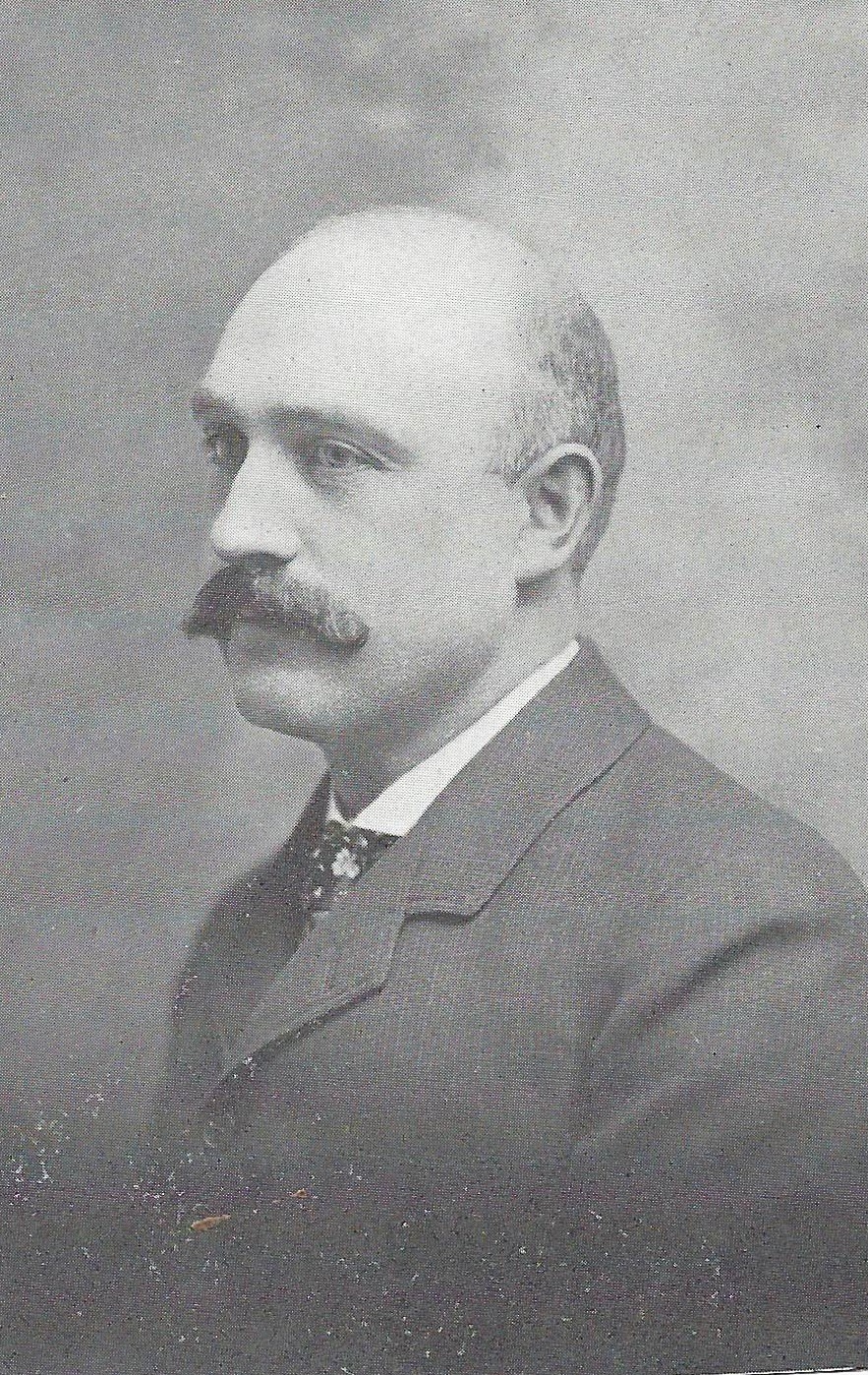
William Wallace C 1913
William Wallace received his early education in the local district school, perhaps attending the same #8 as his older brother John. William’s higher education was from the McGraw Institute in Reeds Ferry. In 1885, at the age of 20, he likewise entered the employ of his Uncle Nathan as a clerk and was soon appointed Assistant Post Master, a position he held until 1890.
In October 1890 brothers John Julian and William Wallace Baker took over and expanded the building and grocery business from their uncle. The Baker Brothers’ building was the location of the early post office at Hudson bridge when the Democrats were in office. When the Republicans were in office the Post Office would re-locate across the square in Daniels and Gilbert. The Bakers’ Building had a long history dating back to the 1860’s. Owners were James Carnes, then Nathan P. Webster, and then John J. and William W. Baker and later Sidney. After operating for two generations it was sold to the Rodgers Family of Hudson prior to being demolished as part of the bridge revitalization.
John Julian was elected town clerk and treasurer in 1892 and continued for 3 years. He was elected again in 1903 and continued as clerk and treasurer, with the exception of 1 year, until 1940. His total years of service as clerk and treasurer were over 40 years! In March 1940 he was honored by his town with a formal resolution for his service. John Julian passed February 1942 and was laid to rest with his family in Sunnyside Cemetery,
William Wallace and Sarah Lee (Oldall) Baker were married in Hudson December 1899. Their family consisted of three sons; John Earl (born February 1903), Sidney F. (born May 1905), and Wallace Grant (born February 1907). William Wallace passed December 1932 at the age of 67.
In the mid 1920’s John Earl took a trip to California and visited Hollywood. After returning home he started a theatrical production group called Hudson Players. He and Vera Tieiney married in November 1927. After his uncle, John Julian, retired as town clerk and treasurer, John Earl was elected. He converted an old roadside farm stand used by Vertner Fogg for the sale of veggies into an office from which he conducted his insurance business as well as his business as Town Clerk. He served as town clerk and tax collector until he passed in 1966, a total of 25 years!
Sidney F. was educated in Hudson and Nashua, graduating from Nashua High. He married Frances M. Slavin om June 1928. Sidney took on the operation of the family grocery store from his father, William Wallace. As a young man Sidney was active in the affairs of the town serving on Police and Fire Departments. After the passing of her brother-in-law Frances served as town clerk for 6 years and as tax collector for 4 years; after which time these positions were held by John P. Lawrence. Sidney and his family resided on Cutler Street in Hudson. Sidney passed May 1888 and was laid to rest in Hills Farm Cemetery.
Between John J., John E. and Frances the Baker family occupied the office of town clerk for 71 years from 1892 to 1972. Researched and written by Ruth M. Parker.
Search for Rev. Benjamin Dean
The Reverend Benjamin Dean moved to town in April 1828 when he became the pastor of the Baptist Church of Nottingham West (now Hudson). We know only a few details of his life before that time. Born in northwestern Massachusetts about 1793 he was ordained at Swanzy, NH in February 1826. Just prior to Hudson he was serving as an Evangelist for the Baptist Society in Westmoreland, NH. Most of his time with the Hudson church was a dark and difficult time. In less than 2 years his connection with the church was terminated as he was deposed by an ecclesiastical council and excluded from the church for immoral conduct. I have no further details about the claims brought against him. To Mr. Dean’s credit it is only fair to say that by 1834 he made a public concession of his wrongdoing and asked forgiveness of both the Baptist and the Presbyterians. You see, at that time both churches were worshipping in two meeting houses at different times; the North meeting house (near Wattannick Hall) and the South meeting house (near Blodgett Cemetery). A short while later he was restored to membership in the Baptist Church; he never returned to the ministry but did reside and work in the Hudson Center community.
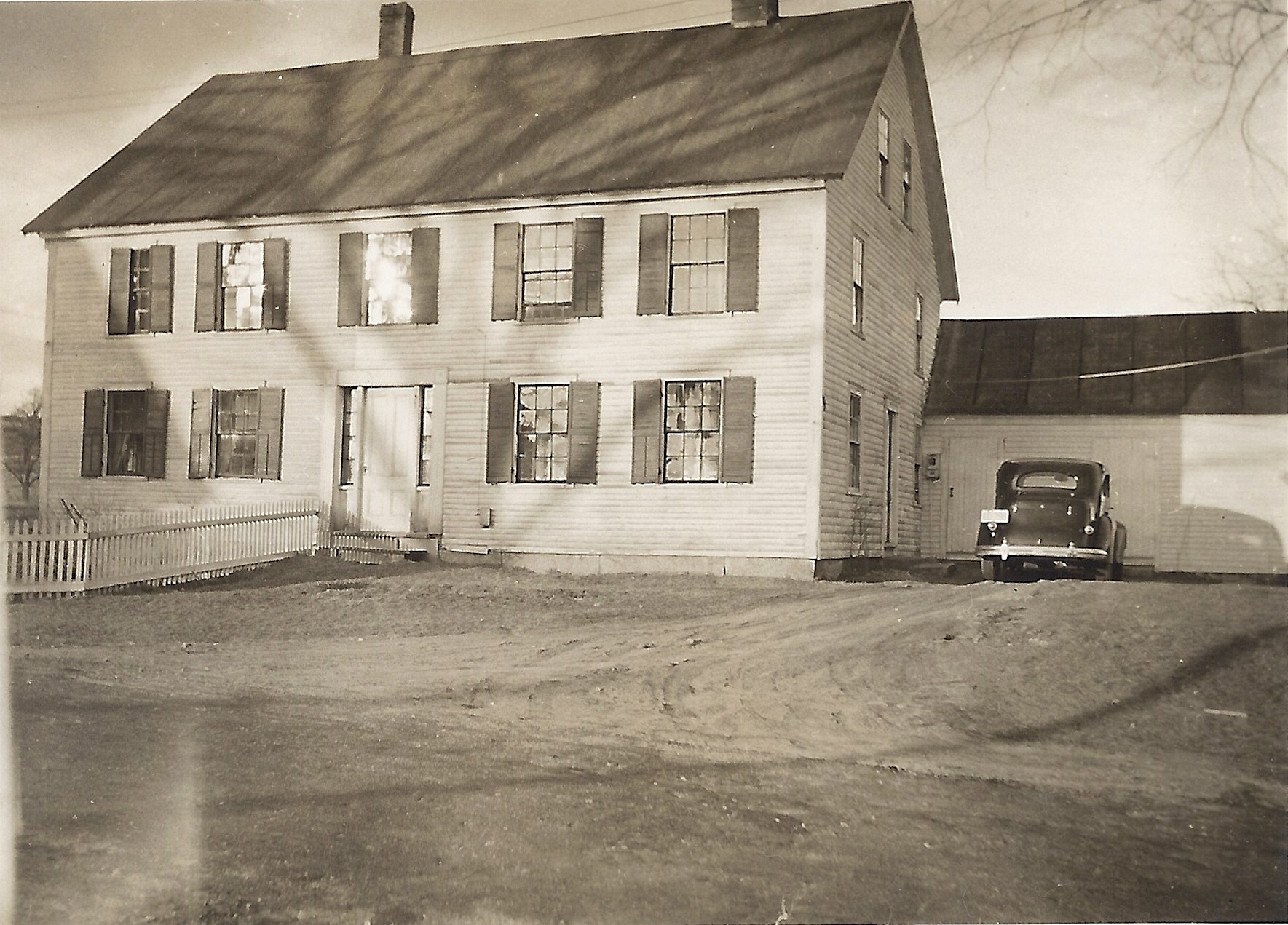
Benjamin Dean House on Hamblet Avenue C 1942
The Benjamin Dean house which was located on Hamblet Avenue is known as “The House Twice Moved”. This house was built by Abraham Page in 1747 on the Bush Hill Road and it later became a part of the Haselton Farm. By 1836 the owner, Benjamin Dean, moved the house down to Hudson Center on the east side of the Hudson Center common and a short distance from the North Meeting house where he had once preached. He married Betsey Hadley of Hudson in 1843. The US Census records, and the 1855 Diary of Eli Hamblett give us a sense of Hudson Center at the time. Eli and Benjamin were neighbors, owning the only houses on Hamblett Avenue. Dean often worked for Hamblet in exchange for farm produce. Agricultural lectures and school were sometimes held in Deans Hall; a large room with an arched ceiling on the second floor of Dean’s home.
The census records gave me a clue that he passed between 1850 and 1860. Whenever I searched for his date of death and where he was interred, I hit a brick wall. As it turns out he passed in December 14, 1856 and was interred in the early potter’s section of Westview Cemetery; burial places set aside for the indigent. The “rest of this story” has more to do with how this information made itself known to me than the facts themselves! The information came from two documents; one a part of the Historical Society collection and the second the old Westview Cemetery record book.
From a work ledger (1840 to 1865) kept by Eli Hamblet I learned that on December 14, 1856 he recorded a charge of $1.40 against the Estate of Benjamin Dean for taking his team to Nashua for a coffin and for sexton duties. Since Hamblet had a definite connection with Westview Cemetery I had reason to think Rev. Dean was buried there. This work document came into possession of the Society just a few years ago; it had been in a private collection and the donor wished that it be returned to this town!! Later, while doing some cemetery research on lot 76 (the Simpson family lot) I had reason to look up that lot in the old record book. Two thirds of the present day lot were once a part of the potter’s field which had remained unused except for one grave, that of Rev. Benjamin Dean. This fact had been lost from the records when the new book was started about 1900. I quickly looked at the layout of lot 76 in the current record book. The center of the lot shows the outline of the Simpson family monument superimposed over an outline of a coffin. I knew where Rev Dean was laid to rest! This information has been incorporated into the current cemetery records and steps will be taken for the site to be marked.
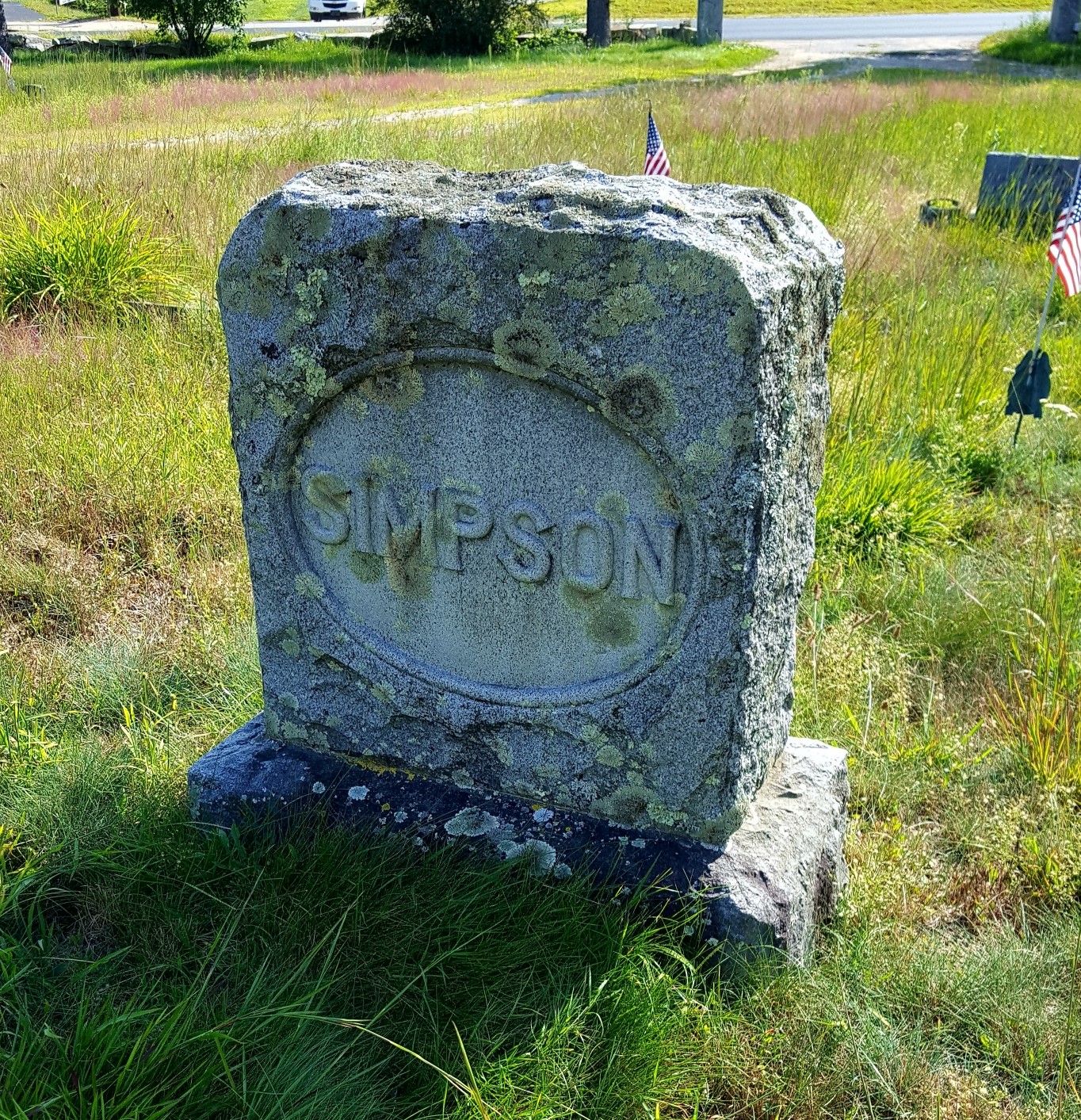
The (unmarked) Grave Site of Rev. Dean
A dear friend of mine once said, “if you are looking for information about someone and that person (past or present) wished to be discovered they will assist you by making the information available to you. This may seem “spookey” but in this case with Rev. Dean this omen is true! The photo of the Dean House is from the collection of the Historical Society. That of the gravesite was taken by the author. Researched and written by Ruth Parker
George O. Sanders
8George O. Sanders began his career as a carpenter, builder, and architect. He left the area for a few years working under contract designing and constructing for the railroad. Returning to the Hudson/Nashua area he immediately established himself as a manufacturer and soon became one of the more progressive businessmen in the area.
George O. Sanders was born in 1851, the oldest son of Abi and Palmyra (Whittemore) Sanders who were married in Hudson January 1850. Their early married life was spent in Hudson and Windham moving to Nashua when George was six years old. Abi established himself as a carpenter and builder. George attended the public schools of Nashua and finished his education at Crosby’s Literary Institution. At the age of 17 he apprenticed the carpenter trade with his father who had become a well known builder in Nashua. George had two younger brothers; James born in 1854, and Fred born in 1869.
By 1872 21-year old George had purchased property in Hudson from Kimball Webster and within a year started building his own residence on the west side of Derry Street at the corner of what is now Haverhill Street. He finished his fine Victorian residence in two years. This residence was immediately recognized for it’s splendor, being one of the finest homes built in Hudson. By means of a windmill he provided a water source for his home from a well in his front yard. The George O. Sanders home, later owned by Harry Kenrick, is today listed on the National Register of Historic Places and known to us as the Lenny Smith House.
By 1878, George having proven his capabilities as a builder acquired ‘go west’ fever and followed the railroad to Atchison, KS where for the next four years he built bridges, stations, stores and engine houses on contract for Atchison, Topeka and Sante Fe and the Union Pacific railroads. He even printed a brochure to advertise his building expertise to the Atchison area. He returned to Hudson and married Linda Thomas, a Hudson native, in November 1882. They settled in his Victorian home on Derry Street. Linda’s wedding outfit is a part of the collection of the Historical Society.
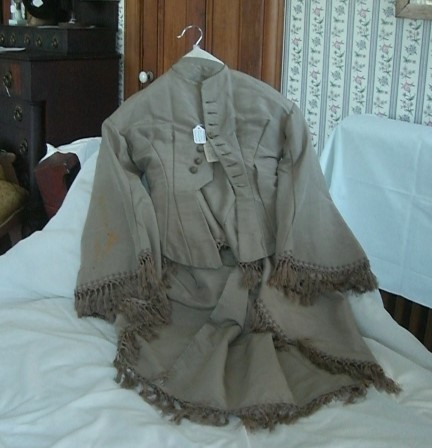
Wedding Outfit of Linda (Thomas) Sanders
Using his knowledge and experience he immediately started a wood product business which within 8 years would be one of the most successful and growing industries in the Nashua area. Working quietly and efficiently George began to clear and grade a 7 acre tract located in Nashua near the junction of the Nashua and the Merrimack rivers. He then erected a steam saw mill and box factory. He quietly and shrewdly kept developing his plant for the best and most productive result. He added a planning operation which was connected directly to the railroad by a private track which he layed at his own expense and for his exclusive use. His facility was totally destroyed by fire in October 1889. Despite the heavy loss he set about rebuilding and within 7 days part of his mill was up and running and completely rebuilt by January 1890. His new mill was lighted by electricity, heated, and equipped with a sprinkler system. From this facility he produced a variety of wood based products and offered the sale of fine lumber. He was able to offer employment to over 60 men.
Expanding his manufacturing interests into Hudson George purchased several acres and water rights from the old Hadley-Willoughby site on Tarnic Brook (Melendy Brook). He build al box shop and operated it for a few years when it was wiped out by a fire in December 1892. This was yet another big financial loss for George. He rebuilt it and sold to Mr. Melendy; retaining the water rites and much of the land.
In the spring of 1891 George purchased land from Nathan Cummings at the height of land on Highland Street. Here he erected a stand pipe and began to install water works in a small way; mainly to supple his own buildings; but, at the request of some of his neighbors he was induced to enlarge the facility to serve them as well. He extended a pipe through the river to his plant in Nashua. By 1893 the Hudson Water Works Company was incorporated with George as president and his wife Linda as Treasurer. Water from this source was used for only a few years as it was of poor quality. This was about the time he had purchased the water rights at Tarnic Brook. He conveyed land and water rites to the water company for use as large wells and pumping station. Sometime before June 1901 the water works was sold to parties in Boston. They failed to be successful and George again became principal stock holder. By July 1903 ownership had been transferred to parties in Maine and incorporated as Hudson Water Company.
During this time period George combined his manufacturing interests in Nashua and Hudson with the American Bobbin Syndicate which was similar to a conglomerate of many businesses brought together to form one larger company. Given his current losses resulting from recent fires and his need to meet payroll and show a profit, this may have appealed to him as a wise business decision. He received stock and bonds in the new company in exchange for the property and business. In addition George became a director and manager of the box department of this new venture. The American Bobbin Syndicate found it more and more difficult to make a profit, resulting in George assuming more and more responsibility for these losses. Ultimately his property was subject to foreclosure; including his residence on Derry Road. By October 1904 his fine Victorian home was sold at public auction for $3,540. It was purchased by Harry Kendrick, the sole bidder. Kendrick owned the property until the mid 1940’s when it was purchased by Lenny Smith.
Soon after this George moved from Hudson. Little else is known about his activities until February 1915 when he established a new company to produce an additive for cement to keep it from freezing. George passed in October 1921 at the age of 70 while living in Boston. He was laid to rest in Sunnyside Cemetery in Hudson.
Before leaving the story of the Sanders family in Hudson there are a few side points to make. In 1885 brother James began to build a row of houses on the south side of Ferry Street. By 1889 he had built 3; by 1890 he had 5; and by 1892 we see there were 9. To this date some 5 of these homes remain. James is known to have retired as a farmer in the south part of Hudson near the ‘limit’ or the five cent limit on the trolley.
By 1891 George had come into possession of the triangular piece of land we now know of as Library Park. He paid a large price for this land, about $1.300. He had it plotted into several building lots and offered them for sale but did not sell any. Several years later the title was acquired by parties in Nashua who again offered lots for sale. Two of these were sold and one house started before the Hills Family arraigned for its purchase for Library Park.
George did purchase land for and built the block, Sanders Block, as five tenements at the corner of Highland and Sanders (now Library) street in 1891.
In 1890 Abi Sanders built himself a home on Baker Street where he and his wife resided until June 1905 when it was sold. Abi passed December 1907 in Nashua at which time he and his wife Palymyra were residents of the Hunt Community in Nashua. Researched and written by Ruth Parker.
Hudson’s Nick Connell, East of Echo
This week’s Remember Hudson When … article is by Stephen Kopiski. He has an interest in our town’s history and personalities like Nick Connell.

Nick Connell 1989
Hudson’s Nick Connell, East of Echo
Kimball Webster and His Family

Kimball Webster 1853
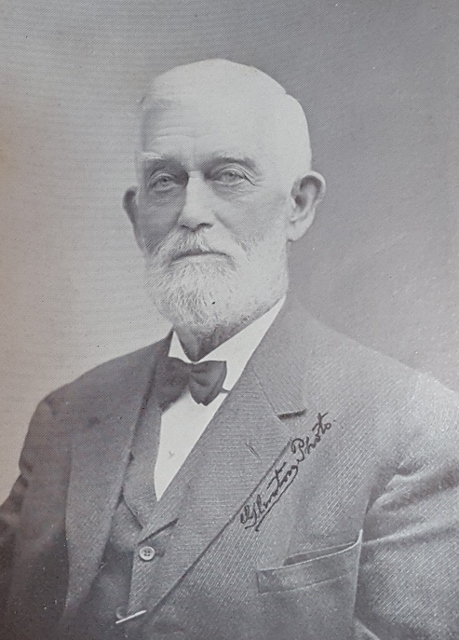
Kimball Webster 1912

Five Daughters of Kimball and Abiah Webster
Officer Polak and the Cruiser 1942

Officer “Andy” Polak and the Cruiser 1942
 Remember Hudson NH When...